Every multi-day walk has one day people warn you about before you leave home. On the last 100 km of the Camino Francés, that day is Palas de Rei to Arzúa: 17.7 miles (28.5 km), the longest of the five days between Sarria and Santiago and Day 3 of the classic five-day walk from Sarria. In cycling they'd call it the queen stage.
We have an unfair advantage writing about it. OurWay's office is in Palas de Rei, on the Camino itself, 42 miles (67 km) from Santiago. Day 3 starts on our street, and we watch it start every morning all season.
For the map, elevation profile and where to sleep on this stage, go to our stage page — that's where the numbers live. This piece is the other half: what the day feels like underfoot, where you'll eat, and the one decision worth making before you book.
Why Day 3 has the reputation it has
On paper the day looks friendly: no mountain pass, no climb anybody remembers. The difficulty is arithmetic. The trail drops to cross a stream, climbs back out the far side, then does it again at the next stream, and again, all day. A profile line makes that look gentle; your quads will file a different report. Add two days already in your legs and the last few miles cost more than they should.
Now the good news. This is also the day with the most life in it: villages at reasonable intervals, two real towns — Melide at the midpoint, Arzúa at the end — a medieval bridge still doing its job after centuries, and Ribadiso, a spot by the water that a lot of pilgrims later name as the prettiest place they slept.
About time: nobody can hand you an honest hour count — pace, stops, and weather decide it. Do the math from the distance instead. At a steady pilgrim pace, call it 2.5 miles an hour (about 4 km/h), 17.7 miles works out to roughly seven to eight hours of walking, not counting long stops. Lunch in Melide is a long stop. Plan around daylight, not around a clock.
First half: Palas de Rei to Melide
Out of town and into the oaks
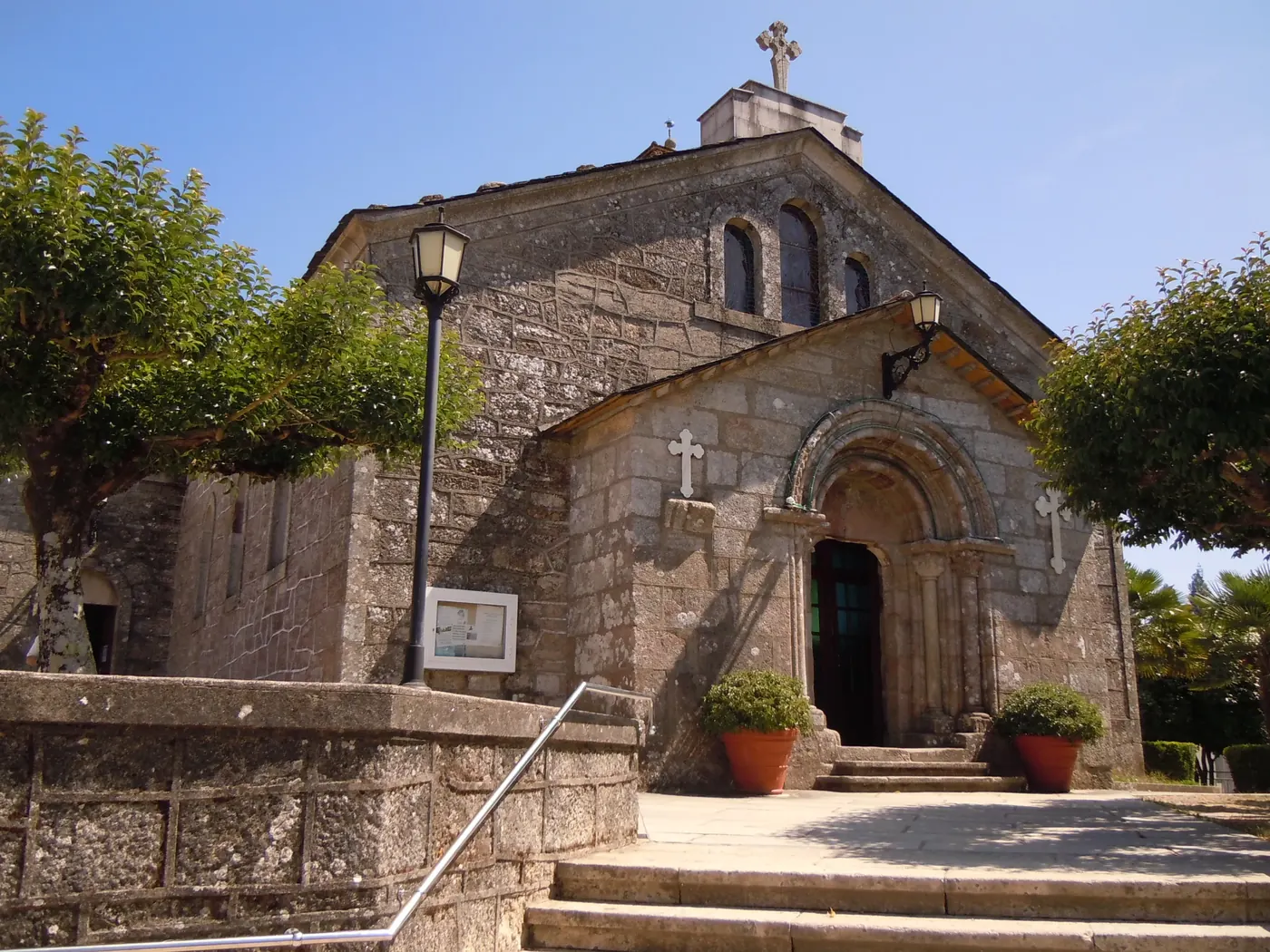
Palas de Rei releases you fast. Ten minutes of yellow arrows and the town is behind you, replaced by farm tracks between pastures, stone walls, and stands of carballos, the Galician oak. A couple of miles in comes San Xulián do Camiño, a handful of houses around a 12th-century Romanesque church. It's the first good stamp of the day for your credencial — the pilgrim passport you carry — and a sane place to settle into a rhythm rather than chase one.
Goodbye Lugo, hello A Coruña
Past Pontecampaña and Casanova the track narrows into oak and shade, and then comes O Coto, where an unassuming marker records something that matters: you leave Lugo and enter A Coruña, Santiago's own province. It's the last province change on the Camino Francés: from here, every step is in the same territory as the cathedral.
Leboreiro and the bridge at Furelos
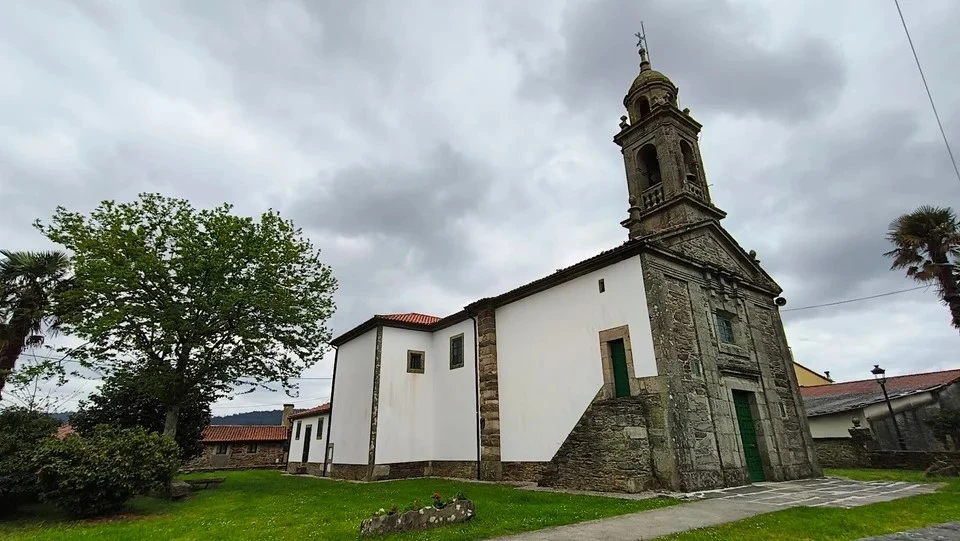
Leboreiro arrives a few minutes later: one cobbled street that holds its medieval shape better than almost anything else on this stretch, with the church of Santa María, its Romanesque doorway, and a small stone bridge on the way out.
The next bridge is better. At Furelos, shortly before Melide, you cross the river on medieval stone, and it's probably the most photographed thing you'll see all day. Stop in the middle for a second: pilgrims have been crossing it for centuries and it still just works.
Melide, pulpo, and how lunch works in Spain
Melide is the food capital of the last 100 km and it arrives exactly when you want it — around the halfway mark, with an appetite you've earned. It's also where the Camino Primitivo joins the Francés, and you notice it walking in: more packs, more accents, more traffic on the sidewalk.
The pulperías here are not a tourist invention. Melide was a market town, and where there were fairs there were pulpeiros boiling octopus in copper pots. The ritual hasn't changed: the octopus comes out of the pot, gets cut over a wooden plate with scissors, and finishes under olive oil, paprika, and coarse salt, with cachelos — boiled potatoes — alongside and wine in a shallow cup. The name everyone repeats is Ezequiel, but several houses in town have the same pedigree. Pulpo á feira is what you order.
Two things are worth knowing before you sit down. First, Galician meal times run later than American ones, and in July and August the midday rush is real — getting in ahead of the peak, or eating slowly in mid-afternoon, beats waiting for a table with your pack on the floor.
Second, size the order to the plan. If you still have half the day to walk to Arzúa, order a half portion with bread and go. The full plate with the wine is for people sleeping in Melide.
Second half: Melide to Arzúa
Boente and Castañeda
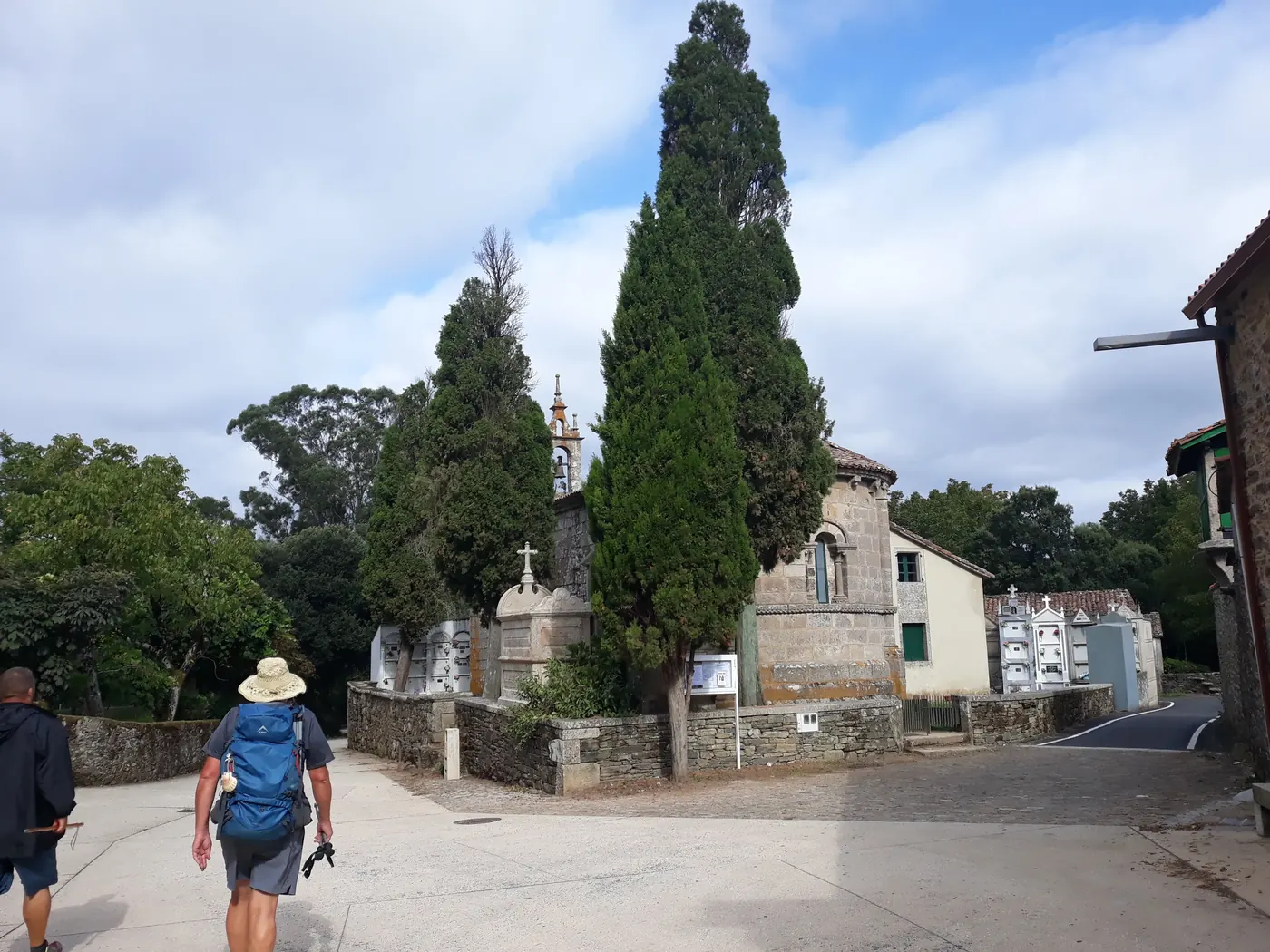
Out of Melide the Camino returns to the morning's pattern: eucalyptus and oak, dirt tracks, up and down. Boente, with its church dedicated to the Apostle, is the natural place to top off water. A couple of valleys later comes Castañeda, where the lime kilns took limestone that medieval pilgrims carried from Triacastela as penance — lime that went, so they say, into the cathedral in Santiago. You're walking an old supply chain.
Ribadiso, down by the Iso
About 2 miles (3 km) from the end, the trail drops to Ribadiso da Baixo, and this is the moment of the day: a cluster of stone houses, a bridge over the Iso River, and an old pilgrims' hospital turned albergue, all in a meadow next to the water. In summer the bank fills with drying socks and ankles parked in the current.
The last climb into Arzúa
From Ribadiso there's one toll left: a sustained pull of about 2 miles (3 km) up into the center of Arzúa. On fresh legs it would be nothing. At the end of this day it's a conversation stopper. At the top: a good-sized, well-served town and a reward with its own protected designation — Arzúa-Ulloa cheese, cow's milk, soft and buttery. Arzúa is also where the Camino del Norte merges in. From here, all the routes are one road.
Too much? Two good ways to split it
Plenty of people walk this in one push and are fine. Plenty of others shouldn't, and there's no medal for suffering:
- Sleep in Melide. The classic split: 8.9 miles (14.4 km), then 8.8 miles (14.1 km). You get in with the whole afternoon ahead of you, eat pulpo without checking your watch, and turn the longest day of the week into two easy ones.
- Stop at Ribadiso instead of Arzúa, about 2 miles (3 km) short of town. You skip the final climb, sleep beside the river, and add those 2 miles to the next day — which at 12 miles (19.3 km) to O Pedrouzo has room for them.
We build itineraries both ways, and your bag goes to the exact place you're sleeping, not to the town the guidebook names. It's the adjustment people ask us for most often, and the one their knees thank them for.
If the day goes sideways
It happens: a blister that turns serious, heat, legs that quit in the afternoon. The useful part is you're not solving it alone in a second language. Our travelers have a 24-hour assistance line answered in English by a local team based in Palas de Rei, and the trip includes Aon's Schengen travel insurance, with €30,000 of emergency medical coverage abroad and repatriation. Melide is where you decide honestly whether you're continuing, staying, or changing the plan. Making that call at the midpoint is a strategy; making it in the last hour is a rescue.
Practical notes from people who live here
- Start at first light. Galician summer mornings begin early, and leaving with the light buys you an unhurried lunch in Melide and keeps the second half out of the worst heat.
- Carry water from the start. There are fountains and bars along the way, but with real distance between them. Don't leave town with less than about 50 oz (1.5 liters).
- Expect mud. The woods between Casanova and Leboreiro hold moisture even in August, so bring shoes with actual tread — our Camino packing list covers the rest.
- Book Arzúa well ahead. It's an official stage end and it fills up in high season. Knowing your bed is waiting changes the mood of that last climb.
Where Day 3 sits in the week from Sarria
Day 3 sits in the middle of the classic five-day itinerary we lay out in our guide to the last 100 km of the Camino Francés from Sarria — about 71 miles (114 km) in total, which clears the 100 km on foot the Compostela requires. Day 1 is Sarria to Portomarín, 13.8 miles (22.2 km), Day 2 is Portomarín to Palas de Rei at 15.4 miles (24.8 km), and Day 4 is Arzúa to O Pedrouzo, 12 miles (19.3 km), on legs that by then know what they're doing.
And if you'd rather walk without managing the logistics, that's our job. We're a Galician agency, license XG-LU-000236, based in Palas de Rei, and we handle the whole trip: rooms with breakfast, one bag up to 33 lb (15 kg) per person moved stage to stage, credencial, 24-hour assistance, and insurance. Tell us how you want the long day handled and we'll build the itinerary around it, or get in touch and ask. Flying in from the States? Start with how to get to Sarria from the US.
Frequently asked questions
Is Day 3 a hard day?
Moderate to hard, and not for the reason most people expect. There's no long climb — it's the constant up-and-down landing on legs that already have two days on them. With an early start, sensible stops, and your bag transported, it's manageable for a reasonably fit walker.
How many hours should I budget?
Treat it as a daylight plan, not a schedule. Working from the distance at about 2.5 miles an hour (4 km/h), you get roughly seven to eight hours of walking, plus whatever lunch, photos, and blister maintenance take.
Can I split it into two days?
Yes, and plenty of travelers do. The cleanest option is a night in Melide, which cuts the day almost exactly in half. The other is stopping at Ribadiso and leaving the climb into Arzúa for the next morning.
Arzúa or Ribadiso — which is the better place to stop?
Arzúa is the official stage end: larger, better served, with more places to sleep. Ribadiso wins on setting — you sleep next to the Iso and push the final climb into a next day that's short anyway.
Do I need to book accommodation in advance?
In high season, yes, and Arzúa above all, since it's an official stage end. If you're traveling with us it's already handled, and your bag goes to whichever town you're actually sleeping in.
If you'd rather we handled the logistics, take a look at our organized trip from Sarria.