
Complete Guide to Mozarabian Way
The Mozarabic Route is the network of Jacobean routes in southern Spain. It covers part of Andalusia and converges in Merida to join the Via Plata, on a journey through Al-Andalus heritage.
Last updated: 28/03/2026
Table of Contents
Technical Summary of Mozarabian Way
- km
Distance
-
days
Alta
Difficulty
Introduction to Mozarabian Way
The routes usually converge in the monumental city of Mérida to continue north on the Vía de la Plata. The distances vary greatly depending on the origin, exceeding 1,000 km in total to Santiago. These paths are loaded with history, traversing diverse landscapes and allowing for the discovery of the deep footprint of Andalusian culture.
History of Mozarabian Way
After the discovery of St. James' tomb in the 9th century, news spread throughout the peninsula, reaching also the Mozarab communities in the south. For them, the figure of Santiago became a powerful symbol of identity and hope. Taking the pilgrimage to Compostela was an act of first-order religious assertion but also an extremely long and perilous journey. They had to traverse hundreds of kilometers through a territory that, depending on the time and the emir or caliph ruling, could be tolerant or extremely hostile towards Christians.
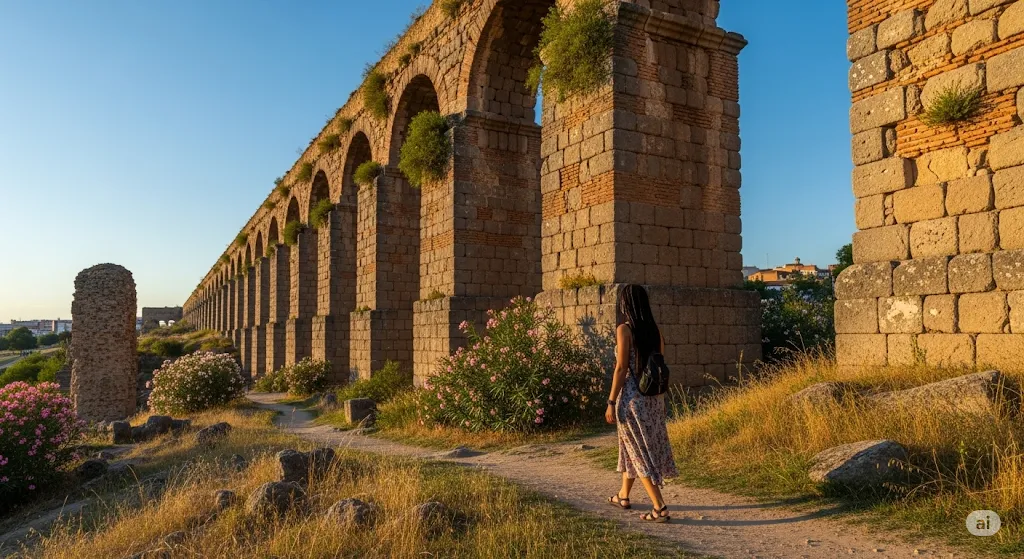
Due to this dispersal of communities, there did not exist a single starting point. Each group began its journey from their hometown, using the network of Roman roads and paths that still structured the territory. Thus, different branches of the Camino Mozárabe were born:
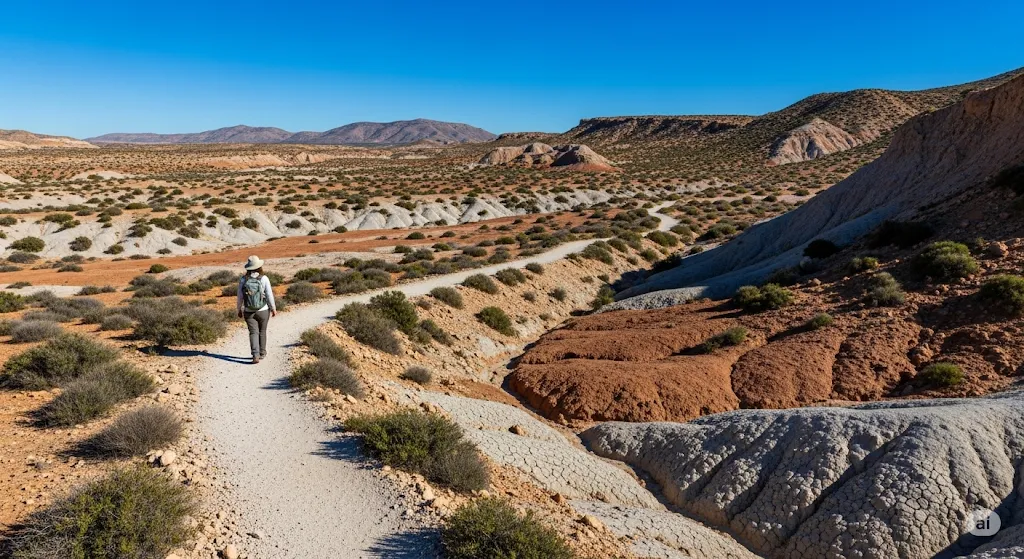
The Almería branch departed from the coast and faced semi-desert landscapes and the Bética mountains' rugged slopes. The Granada branch ascended northwards, like the Jaén branch, while the Málaga branch climbed through the difficult interior ranges. All these routes, along with others of lesser significance, sought a common meeting point, a place where forces could be united to face the rest of the journey. This convergence point was the city of Córdoba.
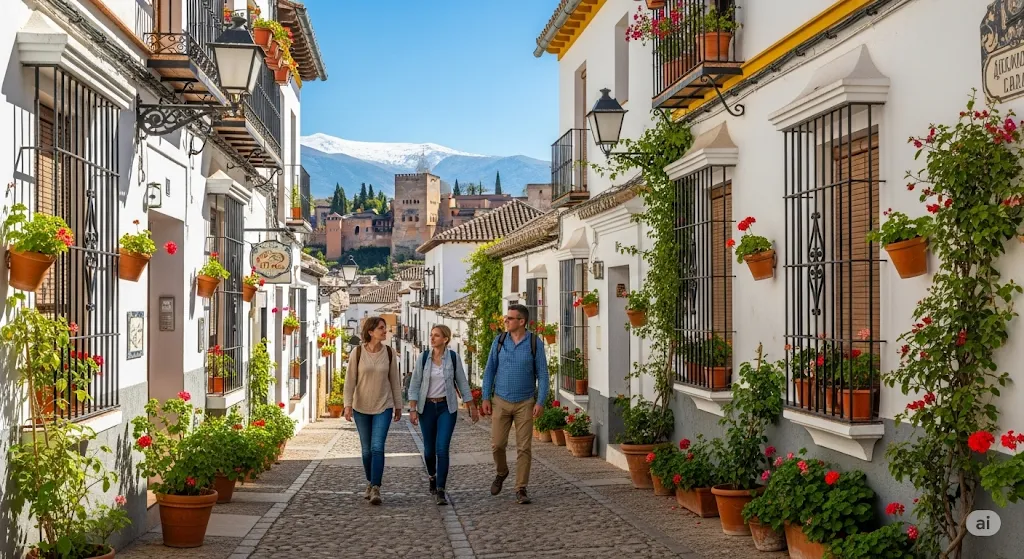
Córdoba, the ancient and magnificent capital of the Caliphate, was a melting pot of cultures and the main hub of communication in Al-Ándalus. Here converged most of the Mozarab pilgrims from the south. From Córdoba, a more unified and traveled path directed northwards, seeking the border and the next major milestone: Mérida.
The city of Mérida, the ancient Emerita Augusta Roman, was the gateway to the Via de la Plata. Reaching Mérida meant for the Mozarab pilgrim leaving behind Al-Ándalus' territory and entering the safety of Christian kingdoms. From there, their pilgrimage merged with that of travelers coming by the Via de la Plata from Seville, to continue together towards the north.
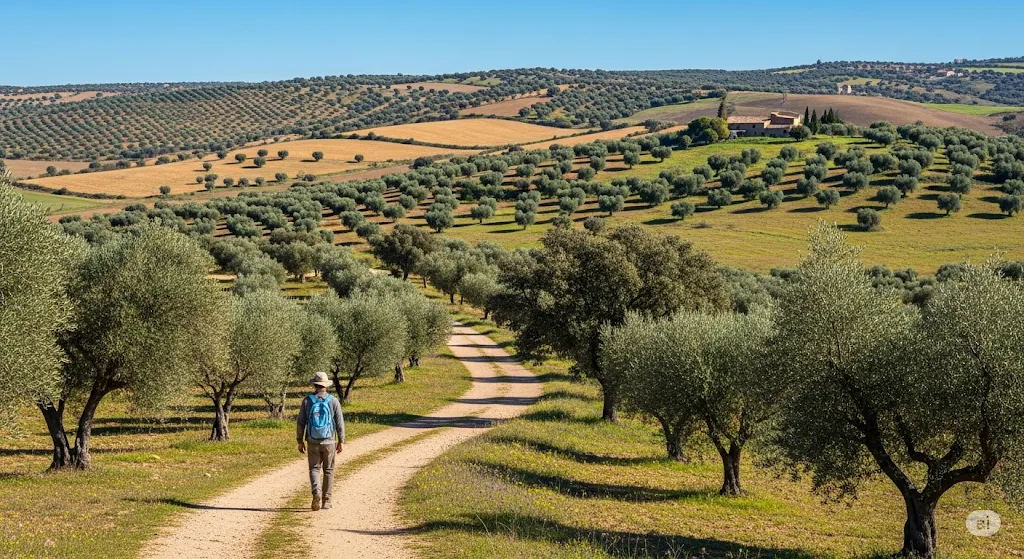
The modern revitalization of the Camino Mozárabe has been a titanic task carried out by a group of associations of friends of the Andalusian Camino. They have done an immense amount of historical research to identify and recover these ancient routes, marking thousands of kilometers and fostering a network of hospitality. Today, walking the Camino Mozárabe is one of the most difficult, solitary, and authentic pilgrimages that exist, a journey through landscapes of breathtaking beauty and the complex and fascinating history of Spain's Three Cultures.
Practical Tips for Mozarabian Way
Best Season
Spring (April-June) and autumn (September-October) are the best seasons. Pleasant temperatures and fewer crowds than summer.
Physical Preparation
Train by walking progressively in the months before. Start with short distances and increase. Your body will adapt to the rhythm of the Camino.
What to Pack
Light backpack (max 10% of your weight), worn trekking shoes, breathable technical clothing, raincoat, sunscreen and basic first aid kit.
General Tips
Carry the pilgrim credential, stay hydrated, respect your pace, book accommodation in high season and enjoy the journey without rushing.
FAQ about Mozarabian Way
El Camino Mozárabe, que parte de diversas ciudades en Andalucía y confluye en Mérida antes de seguir por la Vía de la Plata hacia el norte, cubre una distancia total que puede superar los 1.000 kilómetros hasta Santiago de Compostela. Esta extensión varía según el punto de partida elegido.
La mejor época para emprender el Camino Mozárabe es durante los meses de abril a junio y septiembre a octubre. Durante este período, se disfruta de un equilibrio perfecto entre temperaturas agradables, poca lluvia y una afluencia moderada de peregrinos que permite una experiencia más tranquila.
El Camino Mozárabe se caracteriza por su alta dificultad debido a sus largas distancias, variadas geografías y el desafío de atravesar diferentes entornos. Los peregrinos deben estar preparados para enfrentarse a senderos montañosos, tramos urbanos y paisajes rurales en un viaje que exige resistencia física y mental.
Los costes del Camino Mozárabe varían dependiendo de la ruta elegida, los servicios incluidos y las fechas de viaje. En Ourway Travel, gestionamos la reserva personalizada para garantizar una experiencia única y segura, adaptando el itinerario a tus necesidades específicas.
Nuestra oferta del Camino Mozárabe en Ourway Travel incluye servicios como alojamiento en albergues de peregrinos o hoteles, traslados seguros entre estaciones, asesoramiento sobre preparación física y material necesario. Además, te proporcionamos toda la información necesaria para obtener tu credencial del peregrino.
El Camino Mozárabe es único por su rica historia y diversidad cultural, ofreciendo un viaje que transcurre a través de Andalucía hasta Mérida y luego hacia la Vía de la Plata. A diferencia del Camino Francés o la Vía de la Costa, el Mozárabe proporciona una experiencia más desafiante pero también mucho más rica en historia y cultura andalusí.
Para un peregrino principiante, la elección entre el Camino Mozárabe y la Vía de la Plata depende del deseo de explorar una ruta más históricamente rica o seguir una ruta más conocida. La Vía de la Plata es generalmente menos exigente en términos de distancia diaria, mientras que el Mozárabe ofrece un viaje más extenso pero con mucha historia y cultura.
Para obtener tu credencial del peregrino para el Camino Mozárabe, debes dirigirte a una oficina de Ourway Travel o a cualquier sitio oficial designado por la Asociación de Amigos del Camino de Santiago. Recuerda que es importante llevar un documento identificativo y que nosotros podemos asistirte en este proceso para asegurarte que todo esté correcto antes de comenzar tu viaje.
Ready for this adventure?
Let us organize your pilgrimage. We take care of accommodations, transfers and everything you need.