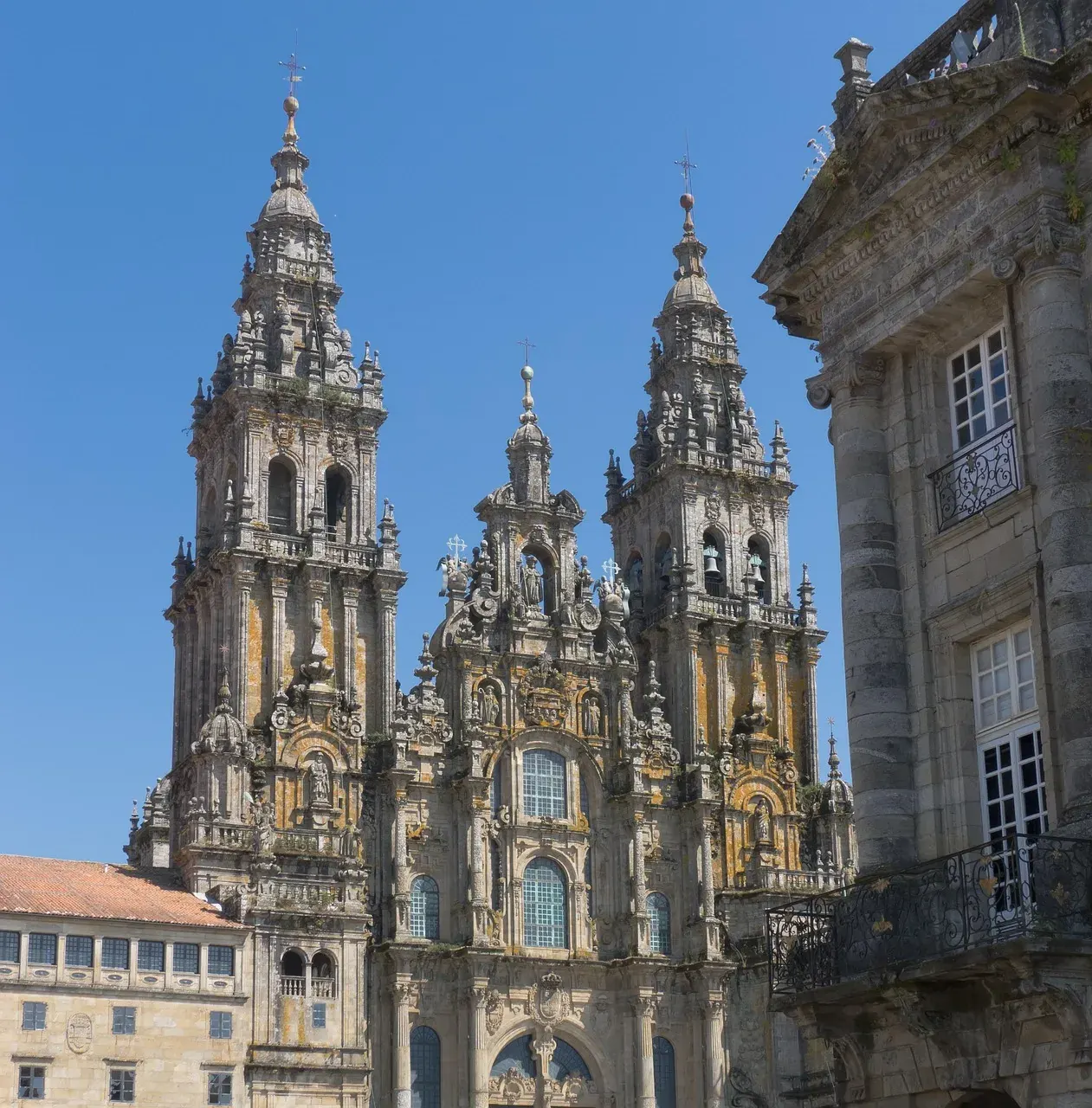

For the thousands of pilgrims who reach Santiago de Compostela every year, the Compostela is the crowning glory of a life-changing experience. Written in Latin and issued by the Church, it is far more than a piece of paper: it is proof of the effort you have put in, a symbol of the road behind you and of the goal you set out to reach. It is not handed over automatically, though, and there are a number of requirements every pilgrim needs to know about and meet. In this guide we take you through the three pillars of earning that hard-won Compostela: the credencial, the stamps and the minimum distance.
The First Pillar: The Credencial, Your Passport on the Camino
Before you take your first step, the first thing to sort out is your credencial — the pilgrim's passport. It is what introduces you as a pilgrim wherever you go, and the one document that makes your journey official.
What Exactly Is the Credencial?
The credencial is an official document, issued in your name and non-transferable, that identifies you as a pilgrim. It usually takes the form of a stiff card folded concertina-style, with spaces for your personal details and — most importantly — row upon row of boxes for the stamps that record your passage through each town along the route. As well as being required to claim your Compostela, it is what gets you a bed for the night in the network of public albergues — pilgrim hostels.
Where to Get Your Credencial
The official credencial is issued in a range of places authorised by Santiago Cathedral. The most common options are:
- Asociaciones de Amigos del Camino de Santiago (Friends of the Camino associations): There is one in almost every Spanish province and in many countries around the world. This is the option we'd recommend.
- Dioceses, parishes and confraternities of St James: Plenty of churches and diocesan offices are authorised to issue it.
- Albergues and key starting points: At the main starting points on each route, such as Saint-Jean-Pied-de-Port, Oviedo, Tui or Sarria, you can usually pick one up at the main albergue or at the local church.
- Online: Some associations let you order one through their website and have it posted out to you.
Remember to fill in your details as soon as it reaches you: name, ID or passport number, where you are starting from and how you are travelling (on foot, by bicycle or on horseback).
The Second Pillar: The Stamps, a Visual Record of Your Journey
The stamps — sellos, or cuños — are hard proof that you have followed the route properly, day by day. Each one has a design of its own, and each tells a small part of your story on the Camino.
Why the Stamps Matter So Much
Their main purpose is to certify that you passed through each point along the route. When you reach the Pilgrim's Office in Santiago, the volunteers will go through your credencial to check that the stamps follow a logical sequence in both date and geography. Beyond the paperwork, though, collecting them becomes one of the rituals pilgrims cherish most: a one-of-a-kind visual record of everywhere you slept, ate or simply stopped to catch your breath.
Where to Get Your Credencial Stamped
There is no shortage of places. Almost every business along the Camino has a stamp of its own. The usual ones are:
- Albergues, guesthouses and hotels.
- Churches, cathedrals and monasteries.
- Town halls and tourist offices.
- Bars, restaurants and shops right on the route.
- Post offices (Correos).
- Guardia Civil and local police stations.
The Golden Rule: Two Stamps a Day on the Final Stretch
This is the one that catches first-time pilgrims out. To rule out any cheating and to show that the minimum distance really was covered in full, Santiago Cathedral requires that over the final 100 km (for pilgrims on foot or on horseback) or the final 200 km (for cyclists), your credencial carries at least two stamps a day. The easiest approach is one at the start of the day, at your albergue or at the bar where you have breakfast, and another at the end of the stage, wherever you are spending the night.
The Third Pillar: Minimum Distance, the Kilometres That Count
Simply arriving in Santiago is not enough to earn a Compostela: you must have covered a minimum distance, documented by the stamps in your credencial.
The Basic Requirement
The rules laid down by the Chapter of Santiago Cathedral are refreshingly clear:
- Pilgrims on foot or on horseback: must have covered at least the final 100 kilometres into Santiago.
- Pilgrims by bicycle: the minimum required is the final 200 kilometres.
It has to be one continuous stretch, and that is worth stressing: walking 50 km from Sarria and another 50 km from Tui does not count.
Popular Starting Points That Meet the Distance
- For walkers (100 km minimum):
- On the Camino Francés, the classic starting point is Sarria, some 115 km from Santiago.
- On the Camino Portugués, most pilgrims set off from Tui.
- On the Camino Inglés, you need to start in Ferrol to cover the distance.
- For cyclists (200 km minimum):
- On the Camino Francés, a firm favourite is Ponferrada (roughly 210 km), which means you get to ride the lovely Ponferrada to Villafranca del Bierzo stage.
- On the Camino Portugués, riders usually begin in Oporto.
The "Christian Motivation" Behind the Pilgrimage
The Compostela is granted to those who make the pilgrimage in a "Christian sense, even if only in an attitude of search". At the office you will be asked what drew you to the Camino (religious, religious-spiritual or spiritual). If your reasons were purely touristic or sporting, you will be given a certificate of welcome instead.
The Finish: Arriving in Santiago and the Pilgrim's Office
After days or weeks of effort, walking into the Praza do Obradoiro is a moment of elation that is hard to put into words. The last step is to head for the Pilgrim's Reception Office to claim your Compostela.
The office is at Rúa das Carretas 33, a short walk from the Cathedral. When you arrive, scan the QR code to take a virtual place in the queue. Once your turn comes, go up to the desk with your completed credencial and photo ID. The volunteer will check your stamps and, if everything is in order, write your name in Latin on the Compostela and hand it over. Mission accomplished.
Taking the Logistics Off Your Hands
Fretting over the details, such as exactly where to start so the kilometres add up or how to plan the stages so you never miss your two daily stamps, can add stress to an experience that ought to feel liberating. At OurWay, we specialise in tailor-made itineraries that meet every requirement for the Compostela. We arrange your starting point and your accommodation and give you a clear day-by-day plan, so your only job is to walk, get your credencial stamped and enjoy the journey with nothing else to worry about.
In Closing: Far More Than a Document
Earning the Compostela is bound by strict rules, but it is simple enough once you know the three pillars: get hold of your credencial, be diligent about the stamps (above all the two a day on the final stretch) and cover the minimum distance. It is a lovely thing to aim for, but remember that the real value of the Camino is not in the certificate at the end. It is in every step, every view, everyone you meet along the way and the quiet change that happens in you. The Compostela is not the point; it is the beautiful symbol of an unforgettable journey.
Ready to start collecting stamps and walk your way to a Compostela? The adventure of a lifetime is waiting. At OurWay, we will help you take the first step.
Plan your trip