If the final 100 km of the Camino Francés have one big day, this is it: 28.5 kilometres from Palas de Rei to Arzúa, the longest day of walking between Sarria and Santiago, with Melide — and its pulpo á feira, Galician-style octopus — waiting exactly halfway. There are few stages we know better: our base is in Palas de Rei.
It is the third day out for anyone starting in Sarria, and its reputation has nothing to do with any great climb, because there isn't one, and everything to do with the sum of its parts: the distance, a roller-coaster profile that never lets up, and two stages already in your legs. Here is the route village by village, where to stop, and how to split it in two if 28.5 km sounds like too much.
The stage in numbers
| Distance | Profile | Halfway point | Provinces | Estimated time | Difficulty |
|---|---|---|---|---|---|
| 28.5 km (the longest between Sarria and Santiago) | no mountain passes, but a sawtooth profile all day — every valley has its river, and every river a short climb out the other side | Melide, around the 15 km mark | you start in Lugo and finish in A Coruña; the boundary comes just before Leboreiro | around 7 hours of walking; with stops, reckon on 8 | moderate to hard — less about the terrain than about everything already in your legs |
Map, elevation profile and accommodation for this stage →
Why this is the big one of the last 100 km
On paper the stage looks gentle: no single section involves much of a climb. The catch is the repetition. The route drops to cross a stream, climbs back out, drops to the next one... and so it goes all day, until you have racked up a good deal more ascent than the profile ever suggested.
The good news: it is also one of the liveliest stages of the final stretch. Bars, drinking fountains and hamlets at regular intervals, two proper towns (Melide and Arzúa), medieval corners of the kind that justify the whole trip, and an alternative finish — Ribadiso — that many pilgrims remember as the loveliest place they stayed.
First half: Palas de Rei to Melide
Out through the oaks to San Xulián do Camiño
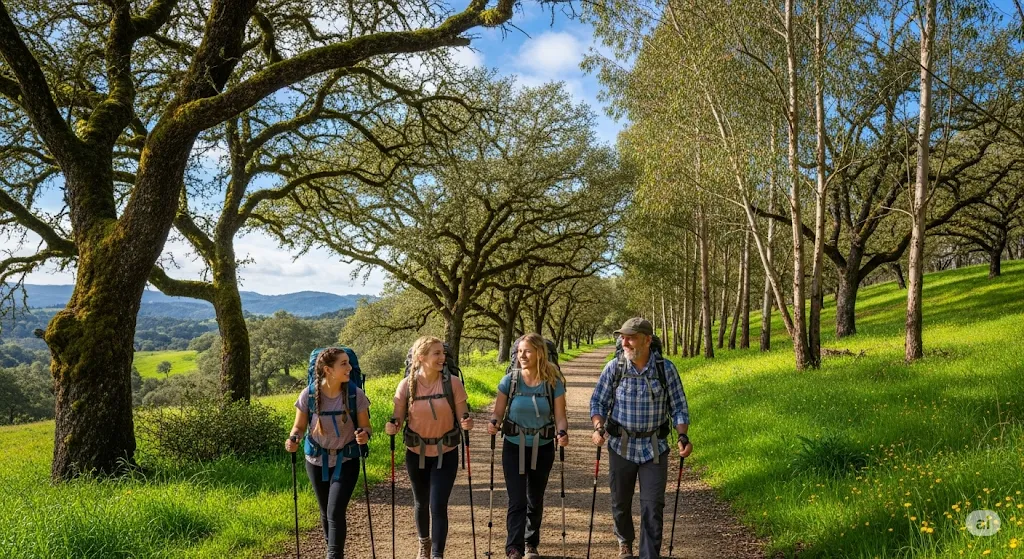
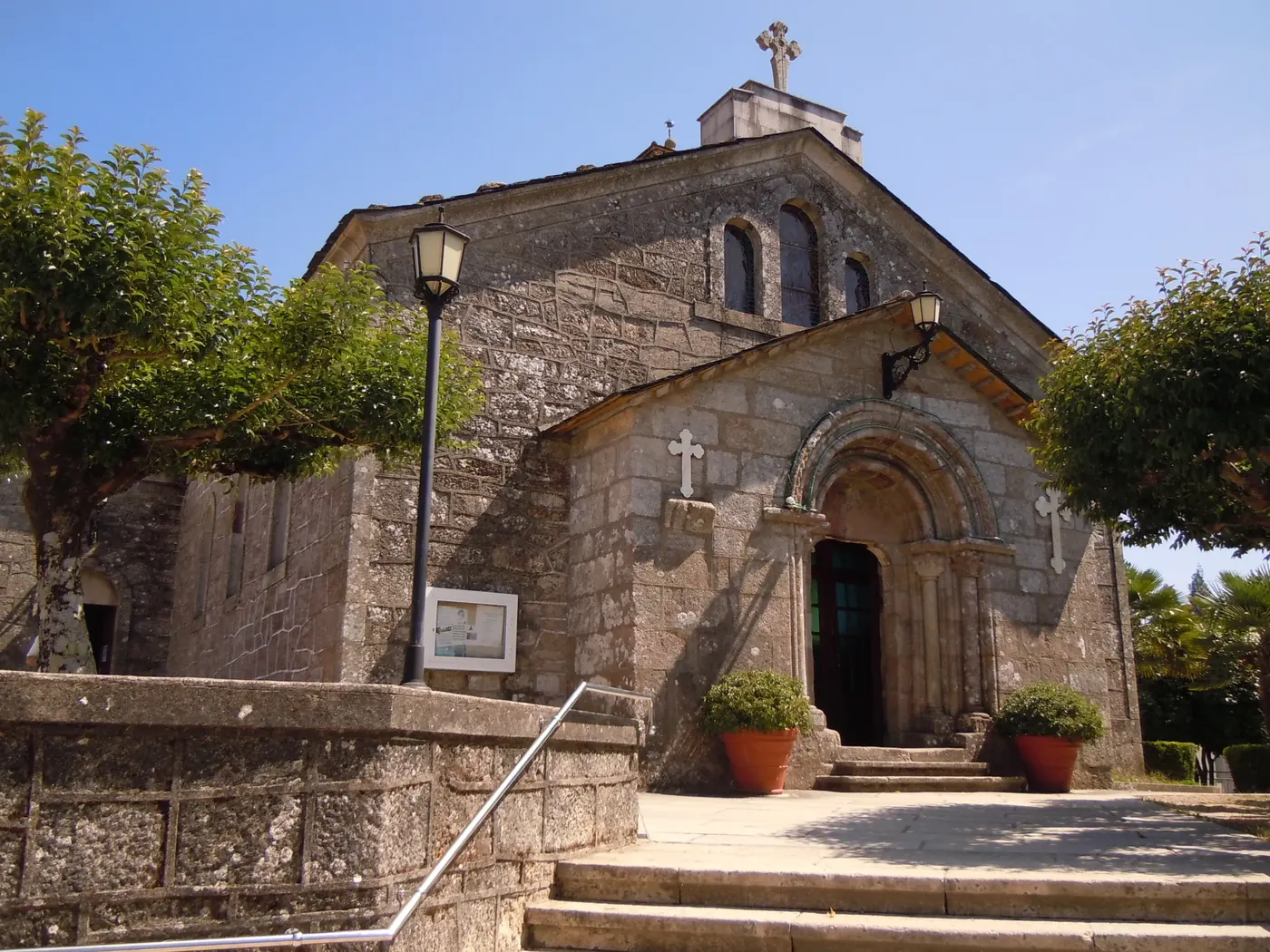
Palas de Rei is soon behind you: within ten minutes the yellow arrows lead you out of town and onto tracks running between meadows, stone walls and oak woods. At around the 3.5 km mark comes San Xulián do Camiño, a tiny hamlet gathered around a twelfth-century Romanesque church. It is the first stamp worth having in your credencial — the pilgrim's passport — and a good place to settle into your rhythm without rushing.
Goodbye, Lugo: crossing into the province of A Coruña
After Pontecampaña and Casanova, along one of the nicest woodland stretches of the entire Camino from Sarria, you reach O Coto, where an unassuming marker stone signals something rather significant: you leave the province of Lugo and enter A Coruña, the province of Santiago. It is the last provincial boundary on the Camino Francés — from here on, every step you take belongs to the land where the journey ends.
Leboreiro and the bridge at Furelos
A short way on comes Leboreiro, a single cobbled street of a village that holds on to its medieval air better than almost anywhere else on this stretch: the church of Santa María, with its Romanesque doorway, and a small stone bridge on the way out make up one of the classic pictures of the stage.
The next landmark is better still. At Furelos, around the 13.5 km mark, you cross the river on a stone medieval bridge that is probably the most photographed spot of the day. Pause for a moment in the middle: pilgrims have been crossing it for centuries and it still does its job. From here, Melide is a stroll away.
Melide, halfway: the pulpo á feira stop
Melide is the gastronomic capital of the last 100 km and it arrives exactly when it should: at around the 15 km mark, with an appetite thoroughly earned. It is also the point where the Camino Primitivo joins the Francés, and you notice it the moment you walk in: more rucksacks, more accents, more going on.
The tradition of the pulperías along the Camino goes back a long way: Melide was always a market town, and where there was a fair there were pulpeiros boiling octopus in copper cauldrons. The ritual is unchanged today: the octopus comes out of the pot, is snipped onto a wooden plate with scissors and finished with a slick of olive oil, paprika and coarse salt; alongside it, a few cachelos — boiled potatoes — and wine poured into the traditional ceramic cunca. The name everyone repeats is Ezequiel, but Melide has several long-established pulperías and it is genuinely hard to go wrong.
Two tips from people who live just down the road:
- Time it well. In July and August the lunchtime rush fills every table. Getting in a little ahead of the midday crowd — or having an unhurried late lunch in the mid-afternoon — changes the experience completely.
- Size the portion. If you still have 13.5 km to Arzúa, a half portion with bread and back on the road. The full plate, wine included, is for those spending the night in Melide.
Second half: Melide to Arzúa
Boente and Castañeda
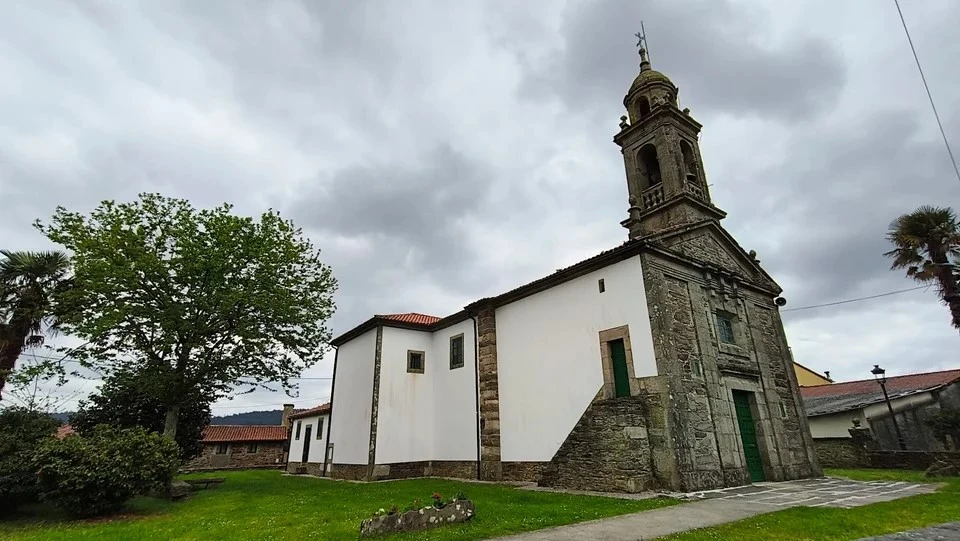
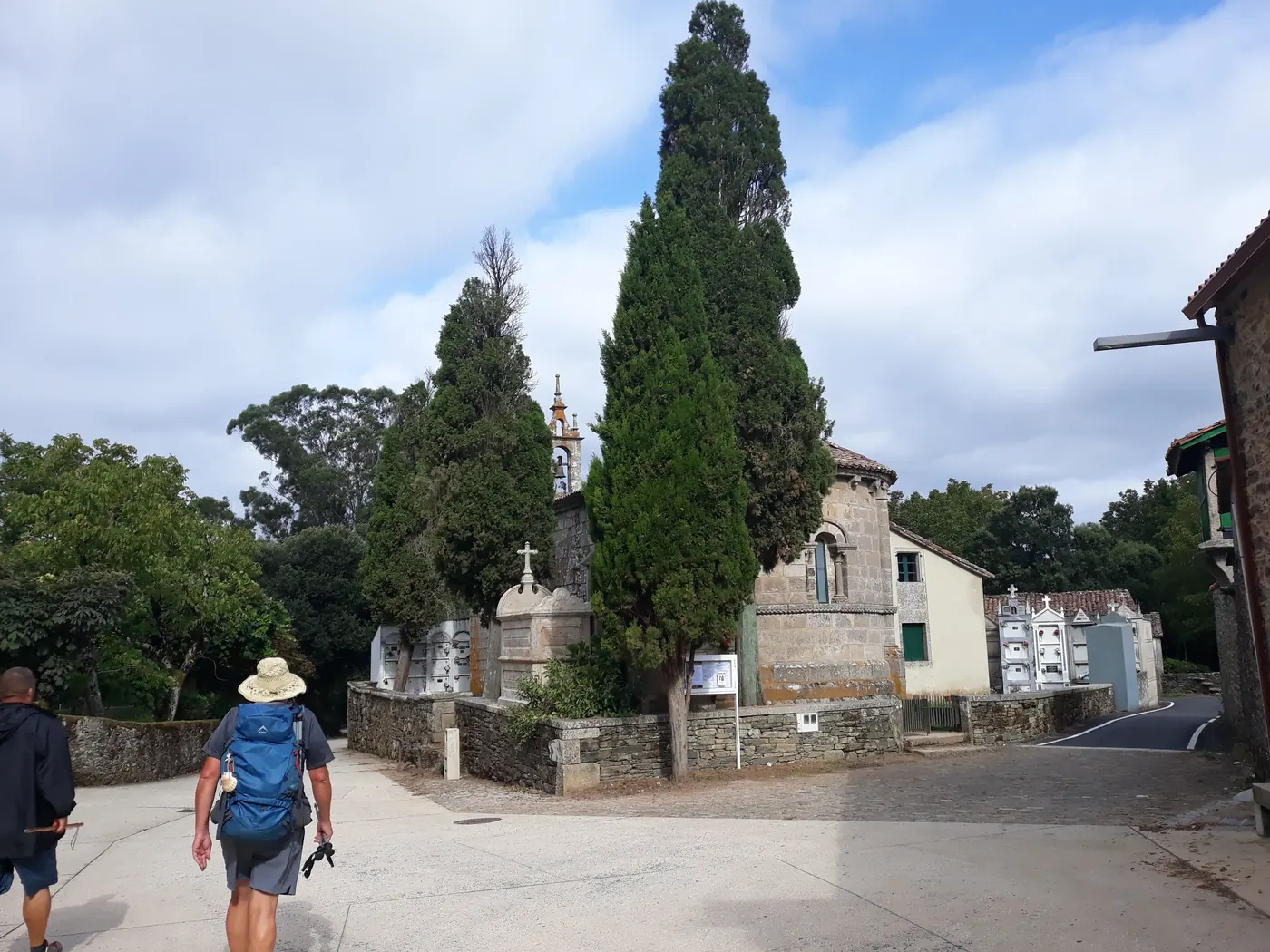
Out of Melide, the Camino returns to the morning's pattern: eucalyptus and oak woods, dirt tracks and roller-coaster ups and downs. Boente, with its church dedicated to the Apostle, marks roughly the 20.5 km point and is the natural place to top up your water. A couple of valleys later comes Castañeda, which has a curious story attached: this is where the lime kilns stood, and medieval pilgrims used to carry limestone here from Triacastela as a penance — lime that ended up, so they say, in the building of Santiago Cathedral.
Ribadiso: the spot beside the river Iso
About 3 km from the finish, the Camino drops down to Ribadiso da Baixo and hands you one of the highlights of the day: a handful of stone houses, a bridge over the river Iso and an old pilgrims' hospital turned albergue — pilgrim hostel — all in a meadow beside the water. In summer the bank fills up with socks hung out to dry and ankles cooling in the current. Few alternative stage finishes can compete with this one — and further down we explain how to make the most of it.
The final climb to Arzúa
From Ribadiso there is one last toll to pay: a steady climb of about 3 km up to the centre of Arzúa. It would not trouble you on fresh legs, but with 26 km behind you it makes itself felt. At the top there is a good-sized town with everything you need, and a reward with its own protected designation of origin: Arzúa-Ulloa cheese, made from cow's milk, soft and buttery, perfect for pudding or tucked into tomorrow's rucksack. Arzúa is also where the Camino del Norte comes in: from here to Santiago, every route is one and the same.
Too much in one day? Two ways to split the stage
If you are short of energy — or you simply want to savour this stretch — there are two excellent ways to break up these 28.5 km:
- Sleep in Melide (15 + 13.5 km). The classic split: you arrive at midday, eat your octopus without a glance at the clock and turn the big day into two gentle ones.
- Finish at Ribadiso instead of Arzúa (about 25.5 km). You cut out the final climb, sleep beside the river in one of the loveliest spots on the Camino, and the next morning add 3 km to a stage that is short to begin with.
At OurWay we build itineraries around both variations: we adjust the accommodation and move your luggage to exactly where you are sleeping. It is the change we are asked for most often... and the one your legs will thank you for.
Practical tips for this stage
- Start early. Galicia gets light early in summer; setting off at first light leaves you time for an unhurried lunch in Melide and keeps you clear of the heat in the second half.
- Keep water to hand. There are fountains and bars, but with gaps between them: do not set off with less than a litre and a half.
- Watch out for mud. The woodland sections between Casanova and Leboreiro hold the damp even in summer, so you will be glad of boots with a decent sole.
- Book Arzúa well ahead. It is an official stage finish and it fills up in high season; with your bed confirmed, that last climb feels like a different hill altogether.
- Listen to your legs in Melide. The 15 km mark is the perfect place to decide honestly whether to carry on, stay the night or adjust the plan.
Where this stage fits on the Camino from Sarria
The Palas de Rei – Arzúa day is the third of the classic 5-stage itinerary we set out in full in our guide to the final 100 km of the Camino Francés from Sarria. If you are following the series, the previous stage is Portomarín – Palas de Rei and the next one, with your legs nicely toughened up by now, is Arzúa – O Pedrouzo.
And if you would rather walk without the logistics, that is exactly what we do: we are a licensed Galician agency (XG-LU-000236) based in Palas de Rei — this stage sets off down our own street — and we organise the Camino Francés from Sarria from 410 € with accommodation booked, luggage moved from stage to stage, the credencial and 24/7 support from a local team.
Frequently asked questions
How many kilometres is it from Palas de Rei to Arzúa? Along the official route of the Camino Francés it is 28.5 km, the longest stage of the last 100 km. With the usual stops, that comes to between 7 and 8 hours of walking.
Is the Palas de Rei – Arzúa stage very hard? There is no long climb anywhere on it, but there is a constant roller-coaster profile that piles up ascent all day long. The real difficulty is the distance on top of the tiredness from the previous stages. With an early start, a sensible rhythm of stops and your luggage carried for you, it is perfectly manageable.
Where do you find the best octopus on the Camino de Santiago? In Melide, right at the halfway point of this stage. Its pulperías have been boiling pulpo á feira beside the Camino for generations and the standard across the town is exceptionally high. In summer, if you would rather not wait for a table, steer clear of the lunchtime rush.
Can I split the stage over two days? Yes, and plenty of people do. The two best options are to sleep in Melide (splitting it 15 + 13.5 km) or to finish at Ribadiso, beside the river Iso, leaving the climb to Arzúa for the following morning. Both fit into an organised itinerary without any trouble.
Is it better to finish the stage in Arzúa or in Ribadiso? Arzúa is the official finish: a good-sized town, well served and with more places to sleep. Ribadiso, some 3 km earlier, wins on charm: you sleep beside the river Iso and leave the final climb for the next morning, added to a stage that is short to begin with.
Fancy this stage in one go, or split in two? Drop us a line and we will put together your Camino from Sarria exactly as you want it.
If you would rather we took care of the logistics, have a look at our organised trip from Sarria.