
Complete Guide to English: Camino English from A Coruña
Shorter variant of the English Way, starting from A Coruña. Suitable for fewer days, although it does not award the Pilgrim's Compostela on its own as it doesn't reach 100km to Santiago.
Last updated: 28/03/2026
Table of Contents
Technical Summary of English: Camino English from A Coruña
73 km
Distance
3
days
4
Stages
Baja
Difficulty
67 accommodations available on the route
Introduction to English: Camino English from A Coruña
All Stages of English: Camino English from A Coruña
Complete route divided into 4 stages
From A Coruña to Sergude
The English Way variant from A Coruña begins with an acclimatization stage that takes the pilgrim out of the Hercules city. The route, with a flat profile and an initial urban section, enters the Coru...
Go to Bruma Hospital
This is a short and gentle stage that connects the interior of A Coruña province with the point of convergence of the English Way. The route is an enjoyable stroll through rural Galicia, through a lan...
Hospital of Brumath to Segurao
After the hardness of the previous stage, the path descends gently into the valley of the River Tambre. The route is an enjoyable stroll through rural Galicia. It's a day to enjoy the tranquility of G...
Follow the way to Santiago de Compostela.
The last and exciting stage of the Camino Inglés. It is a short journey designed to arrive in Santiago with time to enjoy the city. The first part traverses rural surroundings but soon enters the outs...
Key Towns of English: Camino English from A Coruña
The most important towns and cities on this route.
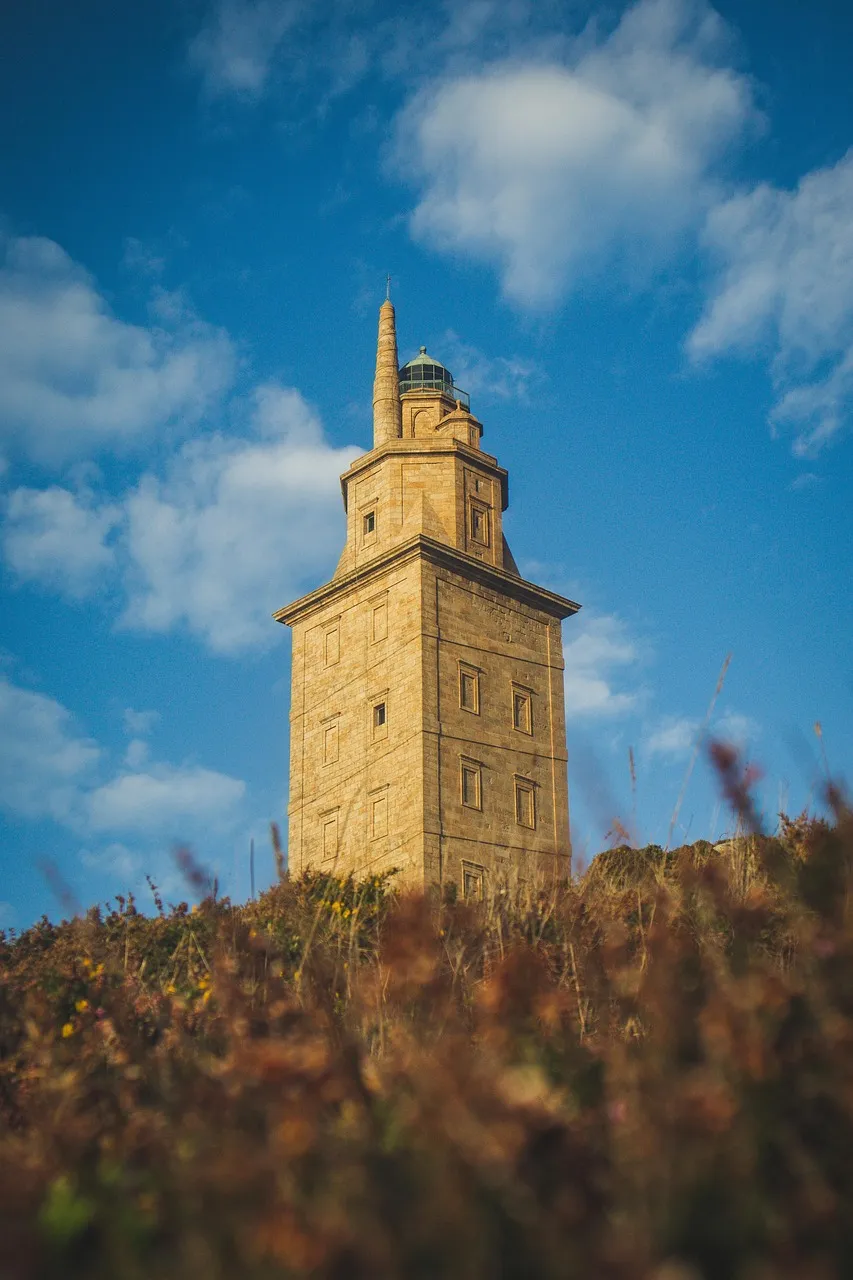
A Coruña
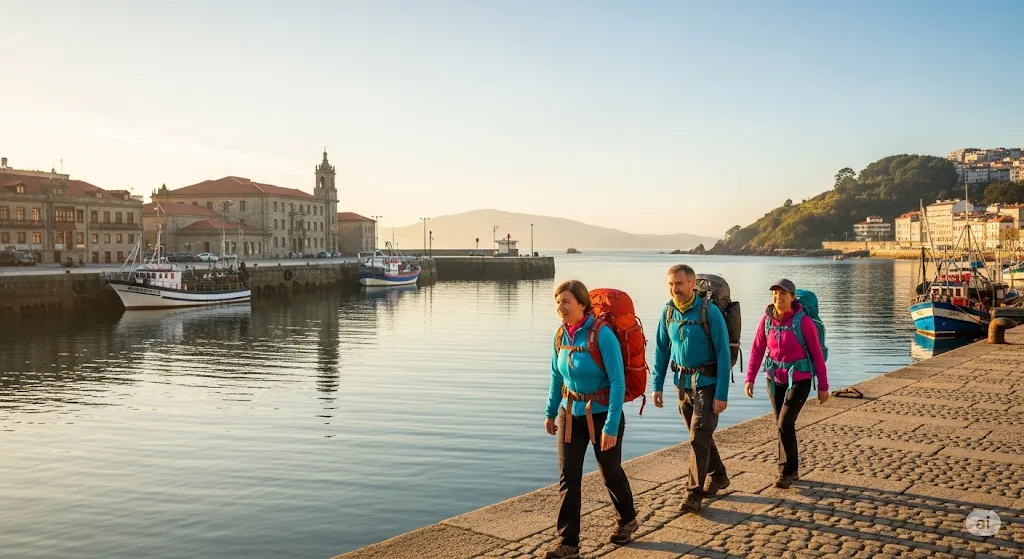
Alternative start for the Camino Ingles, A Coruña shines with its Tower of Hercules. A vibrant Atlantic city to begin an urban and maritime pilgrimage to Santiago.
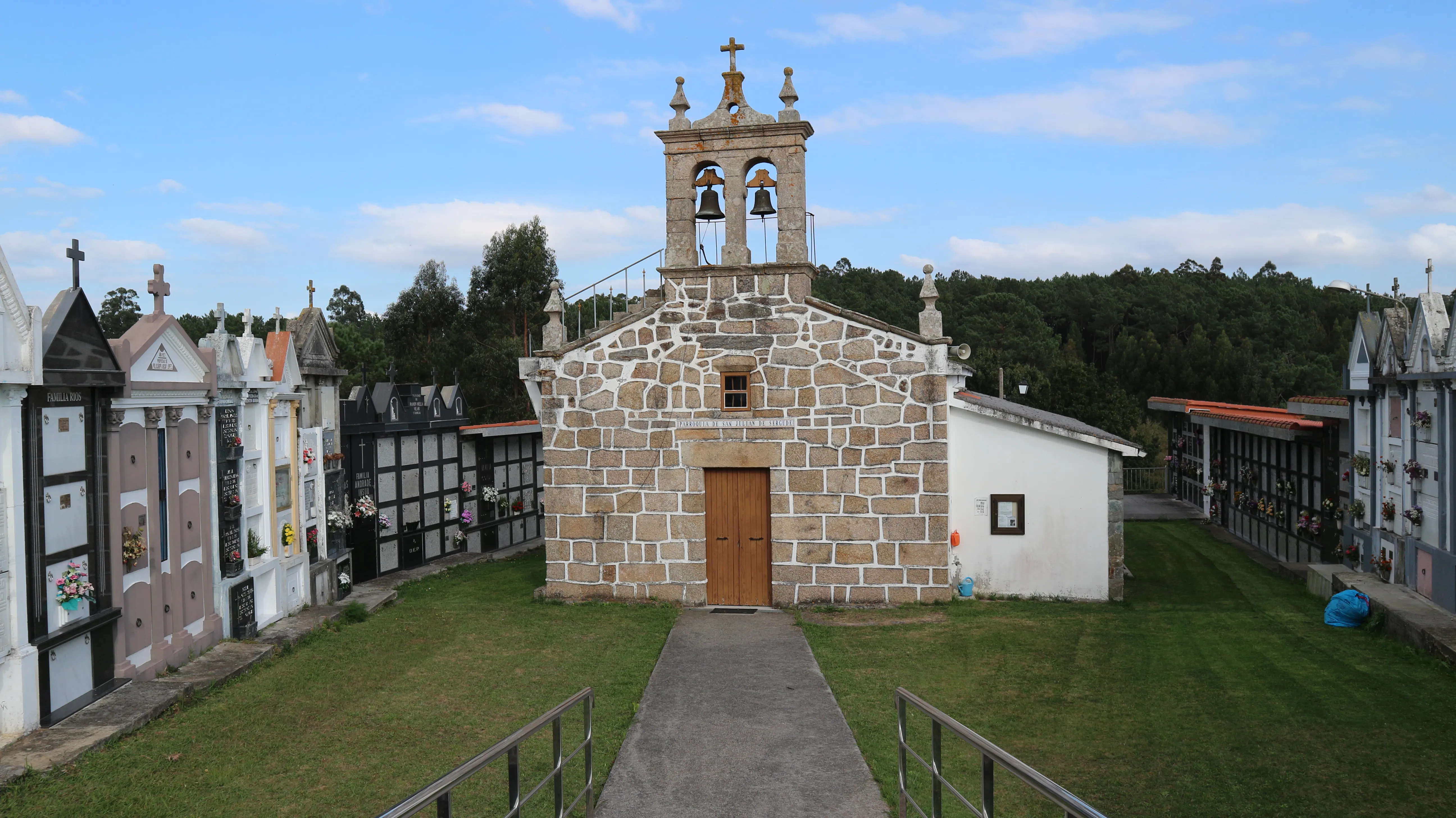
Sergude
Village in the municipality of Carral, a perfect intermediate stop for dividing the first and long stage of the English Way, which starts from A Coruña, offering a rural and strategic rest.
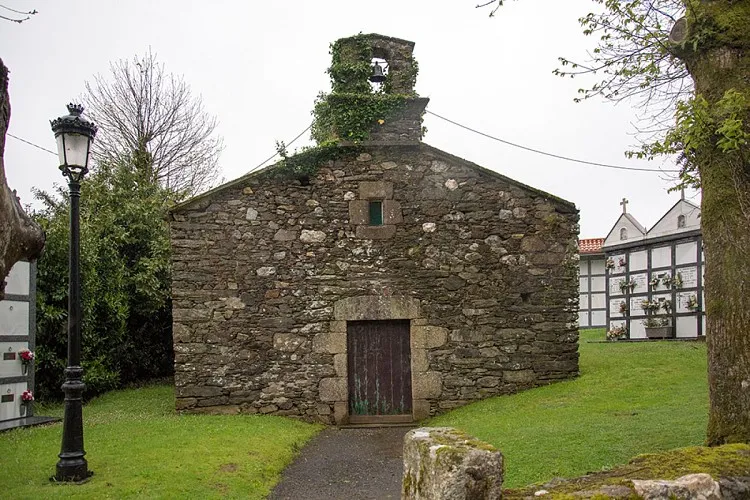
Hospital de Bruma
Historic crossroads and village on the English Way. Its name evokes the old pilgrim's hospital that received walkers from Ferrol and A Coruña. A rural oasis.
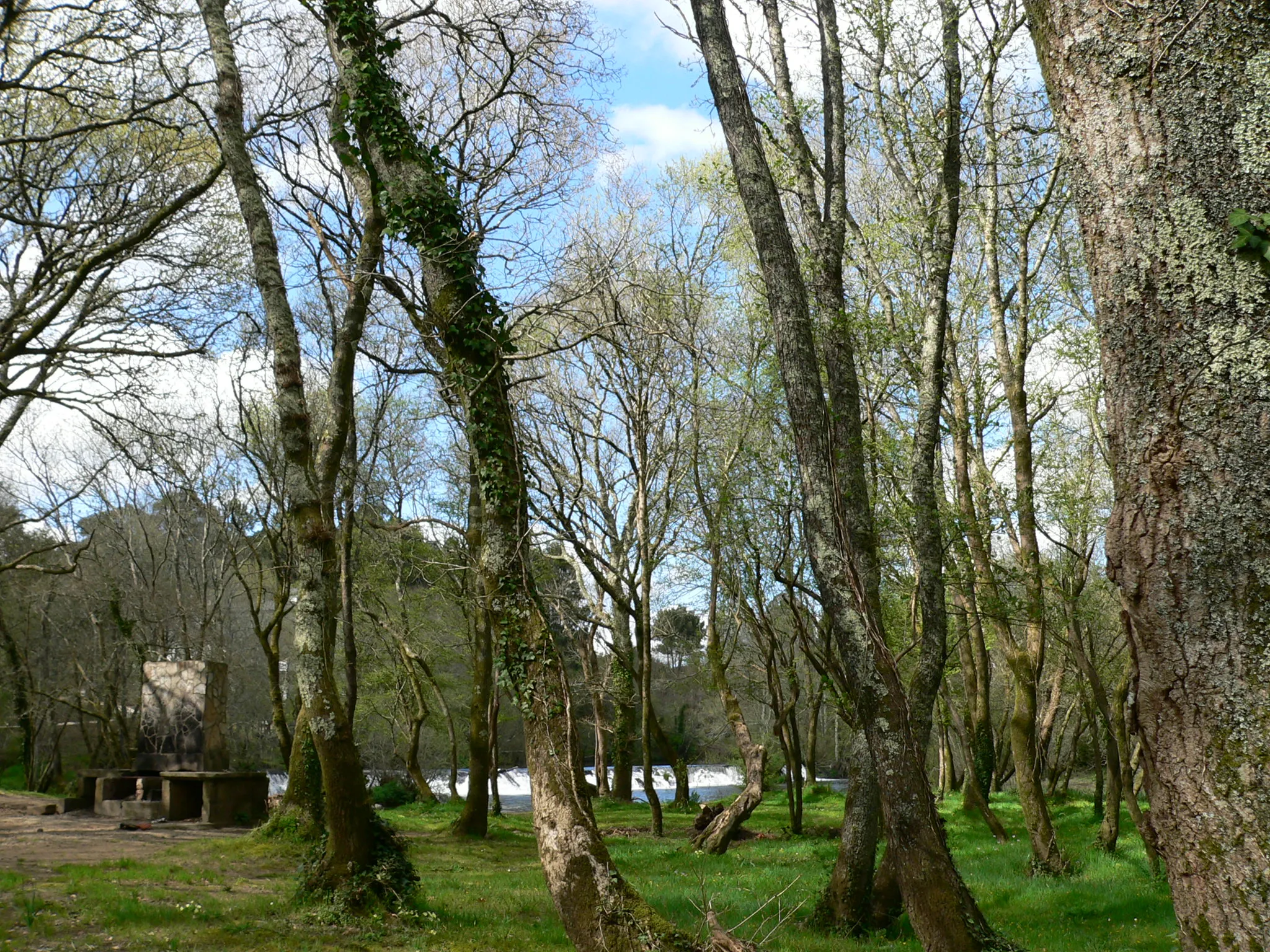
Sigüeiro
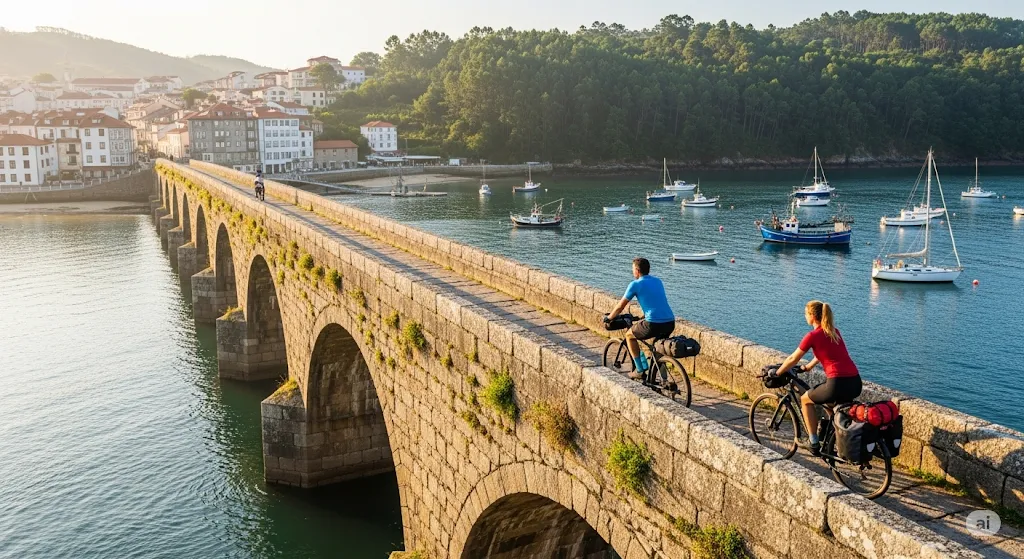
Capital of the municipality of Oroso and last major stop on the Camino Ingles before Santiago. Sigüeiro, with its medieval bridge over the River Tambre, is the prelude to the Compostela destination.
History of English: Camino English from A Coruña
A Coruña, protected by the Tower of Hercules —the oldest Roman lighthouse in the world still in operation— has been one of the most strategic ports on the Atlantic peninsula. During the heyday of maritime pilgrimages in the 14th and 15th centuries, its bay was filled with the silhouettes of "cogs", robust merchant ships adapted for the occasion, which transported hundreds of pilgrims. The choice between disembarking at A Coruña or the more sheltered port of Ferrol depended often on the state of the sea, prevailing winds or commercial interests.
The journey for these pilgrims was long and perilous. After weeks or even months of a grueling sea crossing, disembarking in A Coruña was a moment of immense joy and relief. From there, they were expected to embark on a relatively short walk of about 73 kilometers to Santiago. This brevity was undoubtedly one of its advantages. It allowed them to reach the Apostle's tomb in just two or three days' time, a respite after the hardships of crossing the ocean.
The itinerary begins from A Coruña's historic quarter, St. James Church, and heads southward, leaving the city behind to plunge into Galicia's rural interior landscape. It traverses a terrain of gentle hills, lush eucalyptus forests and small villages on an ancient route network and trails. The landmark feature of this route is the Hospital de Bruma site in Mesía.
As its name suggests, Hospital de Bruma was the location of an important pilgrim hospital founded in 1140 by the Order of St. James. Its placement was not coincidental: it was situated at the exact point where this road from A Coruña converged with the route coming from Ferrol. In Bruma, the two currents of maritime pilgrims merged into a single and more substantial human river to face the final stages together towards Compostela. Today, the pilgrim hostel in Bruma remains a meeting place and a reminder of its significant historical function.
A particularity of this branch in modern times has been the regulation for obtaining the "Compostela". Since its route is under 100 kilometers minimum required, for a long time pilgrims who started only from A Coruña were not eligible to receive the certificate. However, the Church adapted the norm: now pilgrims (especially foreigners) can obtain the Compostela if they certify having walked at least 25 kilometers of a Jacobean route in their country of origin before starting the A Coruña to Santiago leg. This measure has revitalized the route enormously, restoring it its rightful popularity due to its profound historical significance. It is an authentic way to experience the final stage of those brave pilgrims who crossed the sea for their faith.
Accommodations on the Route
The English: Camino English from A Coruña has 67 verified accommodations along the entire route.
View Stages & AccommodationsPractical Tips for English: Camino English from A Coruña
Best Season
Spring (April-June) and autumn (September-October) are the best seasons. Pleasant temperatures and fewer crowds than summer.
Physical Preparation
Train by walking progressively in the months before. Start with short distances and increase. Your body will adapt to the rhythm of the Camino.
What to Pack
Light backpack (max 10% of your weight), worn trekking shoes, breathable technical clothing, raincoat, sunscreen and basic first aid kit.
General Tips
Carry the pilgrim credential, stay hydrated, respect your pace, book accommodation in high season and enjoy the journey without rushing.
FAQ about English: Camino English from A Coruña
El Camino Inglés desde A Coruña mide aproximadamente 73 km en total, lo que se puede caminar cómodamente en alrededor de 3 días. Este recorrido es ideal para quienes buscan una experiencia rápida pero intensa del camino hacia Santiago.
La mejor época para realizar el Camino Inglés desde A Coruña es durante los meses de primavera (abril-junio) y otoño (septiembre-octubre). Durante estos periodos, disfrutará de un clima agradable, menos aglomeraciones que en verano y aún así, tendrá la posibilidad de alojarse sin problemas. May es especialmente recomendado por su temperatura perfecta y hermoso paisaje.
Con Ourway Travel, tu viaje en el Camino Inglés desde A Coruña incluye el traslado de equipaje entre etapas, alojamiento asegurado en albergues o casas rurales y un paquete completo que facilita la planificación. También te proporcionamos una credencial peregrina para ayudarte a obtener la Compostela si completas otros caminos adicionales.
El Camino Inglés desde A Coruña se destaca por su distancia más corta y concentración histórica, ofreciendo una visión intensiva del viaje de los peregrinos marítimos. Ideal para quienes buscan completar el camino en menos días, aunque no otorga la Compostela solo con este recorrido debido a sus 73 km.
El costo de nuestro itinerario en el Camino Inglés desde A Coruña varía según la época del año y las comodidades elegidas. En general, incluye alojamiento asegurado, gestión de equipaje entre etapas, y asesoramiento personalizado para hacer tu viaje lo más cómodo posible.
El Camino Inglés desde A Coruña es una opción ideal para aquellos que buscan un viaje más corto y directo hacia Santiago, con solo 73 km de recorrido. Ofrece una concentración histórica fascinante debido a su posición estratégica como puerto marítimo durante la Edad Media.
La dificultad del Camino Inglés desde A Coruña se considera baja, con caminos bien mantenidos y desafíos mínimos en términos de desnivel. Este recorrido es perfecto para principiantes o quienes buscan una experiencia tranquila sin grandes exigencias físicas.
Para reservar tu viaje en el Camino Inglés desde A Coruña, solo debes visitar nuestra página web y seleccionar la opción correspondiente. Nuestro equipo de expertos está a tu disposición para asesorarte sobre las mejores fechas y ayudarte con todas las opciones disponibles.
Ready for this adventure?
Let us organize your pilgrimage. We take care of accommodations, transfers and everything you need.