
Complete Guide to Portuguese Cycle Route
Discover the essence of Galicia on bike from Tui. This popular section of the Portuguese Way takes you to Santiago in two intense and rewarding stages.
Last updated: 28/03/2026
Table of Contents
Technical Summary of Portuguese Cycle Route
118.8 km
Distance
2
days
2
Stages
Media
Difficulty
52 accommodations available on the route
Introduction to Portuguese Cycle Route
All Stages of Portuguese Cycle Route
Complete route divided into 2 stages
To Pontevedra by Bike
The first stage of the epilogue to Fisterra by bike is an enjoyable ride through rural Galicia. The route is undulating but without major difficulties, ideal for starting this last part of the journey...
Pontevedra to Santiago de Compostela by bike
This cycling stage is a challenge that ventures into the most isolated Galicia. The profile is a continuous up and down, a killer hill that demands good physical form. The beauty of the landscape, wit...
Key Towns of Portuguese Cycle Route
The most important towns and cities on this route.
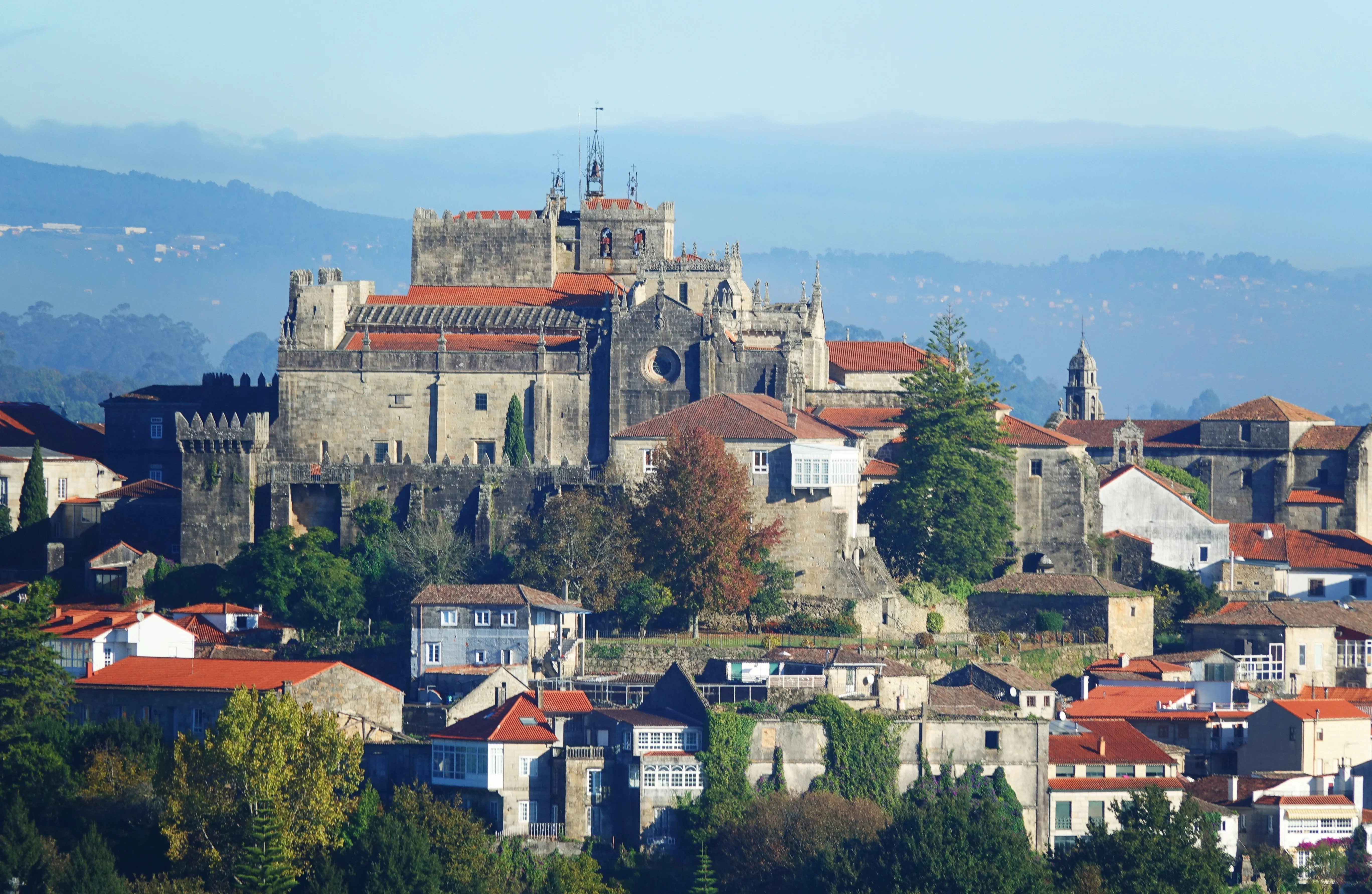
Tui
Entrance to the Portuguese Way in Galicia. Tui, with its imposing Cathedral-Fortress over the River Minho, offers a historic and monumental welcome to pilgrims on Spanish soil.
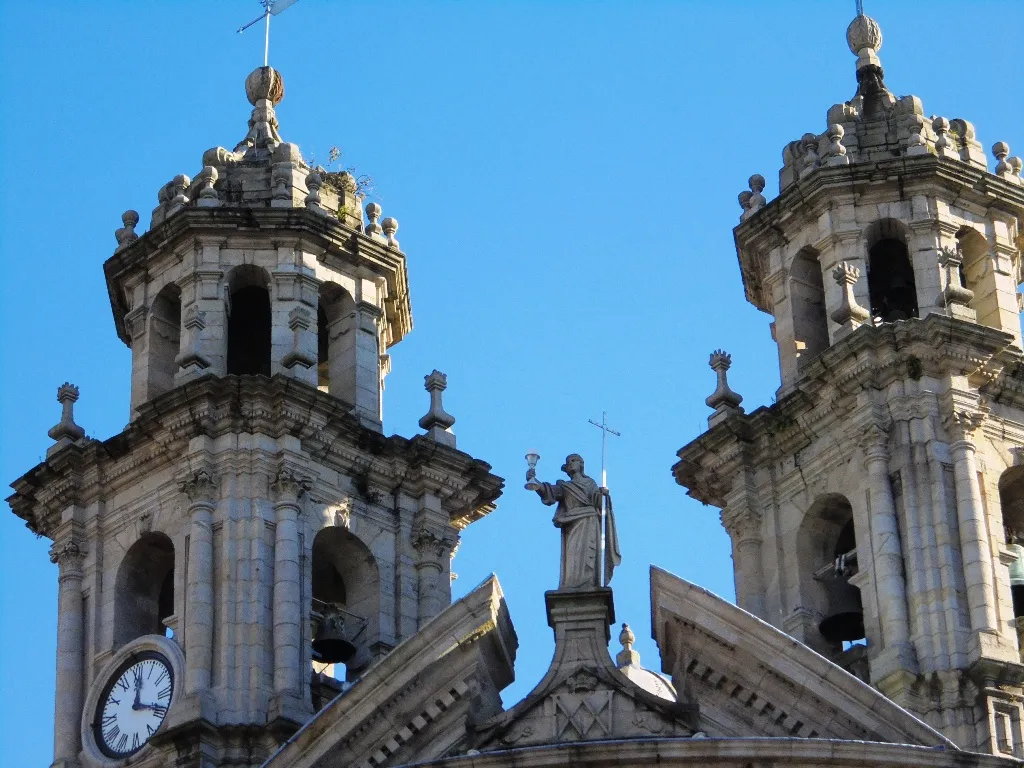
Pontevedra
Capital of the Rías Baixas and one of the jewels of the Portuguese Way, its immaculate pedestrian historic center and its Pilgrim Sanctuary invite rest and enjoyment.
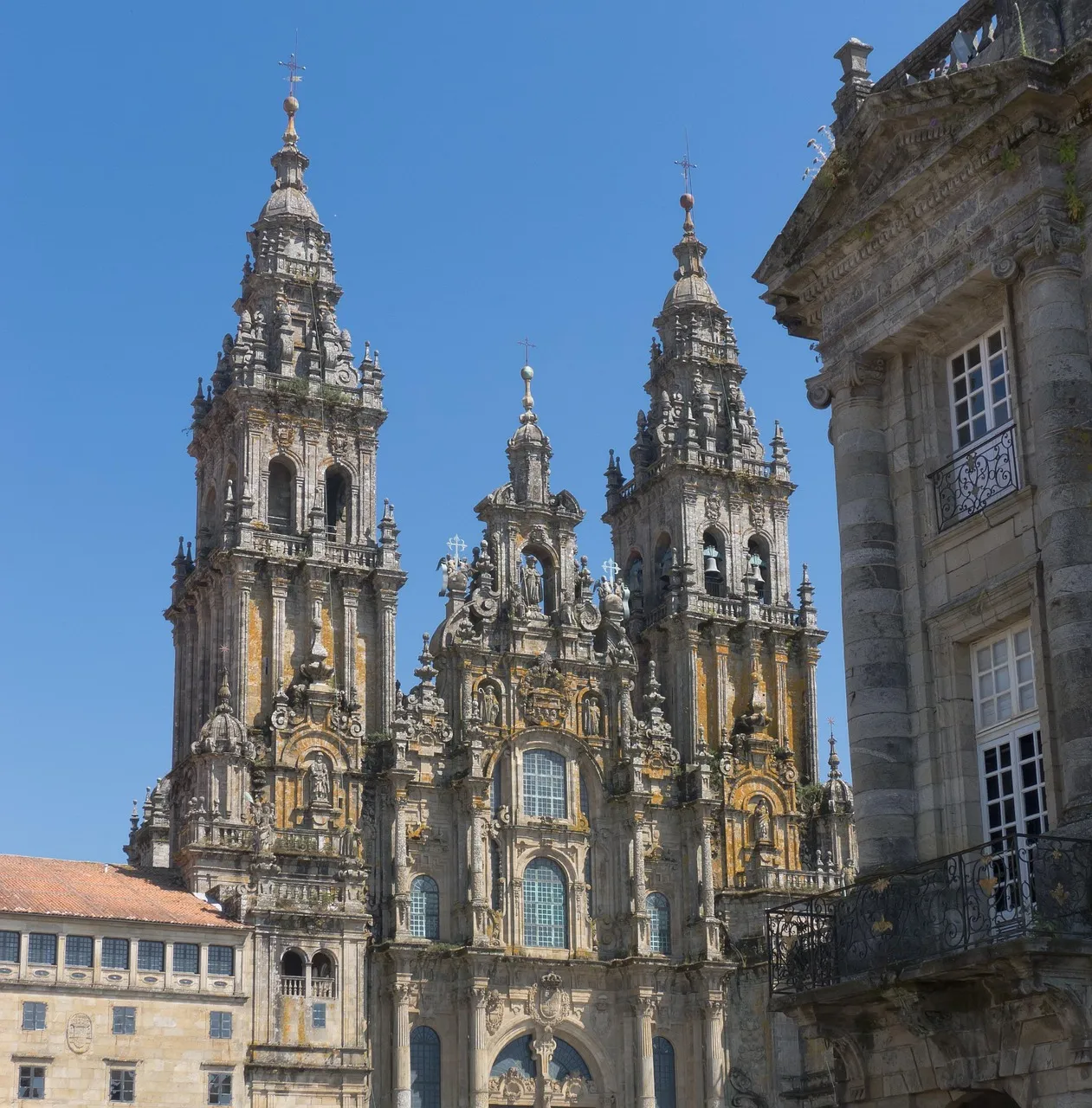
Santiago de Compostela
The Final and Spiritual Heart of the Way of St. James. Its majestic Cathedral and Plaza del Obradoiro welcome pilgrims from all over the world in a full of emotion finale.
History of Portuguese Cycle Route
Although walking from Portugal is centuries old, the mass adaptation to cycling is a more recent phenomenon linked to the boom in cycling tourism in the 21st century. Unlike other routes that are more mountainous, the final stretch of the Portuguese Way from Tui or even Oporto does not present major mountain passes or excessively technical sections. Its undulating profile with gentle climbs and descents through the valleys and forests of the Rías Baixas made it immediately attractive to a wide range of cyclists, not just experts in BMX, but also families and occasional cycling tourists.
The history of its cycling route has been one of consolidation. The route largely follows the same itinerary as walkers, with many rural roads and forest trails ("horse paths") being wide enough and firm enough for bicycles to pass without problems. In the few points where the path becomes too narrow or technical, there are well-signposted alternatives on local traffic roads that ensure a safe and smooth experience.
The popularity of the route from Tui, which is about 120 kilometers long, has made it an ideal option for a long weekend getaway (2 or 3 days of cycling). This in turn has generated a significant service industry around bike pilgrims. The proliferation of high-quality bicycle rental companies (including electric bikes), luggage transport services and repair shops along the route has eliminated many logistical barriers that previously prevented people from cycling to Santiago.
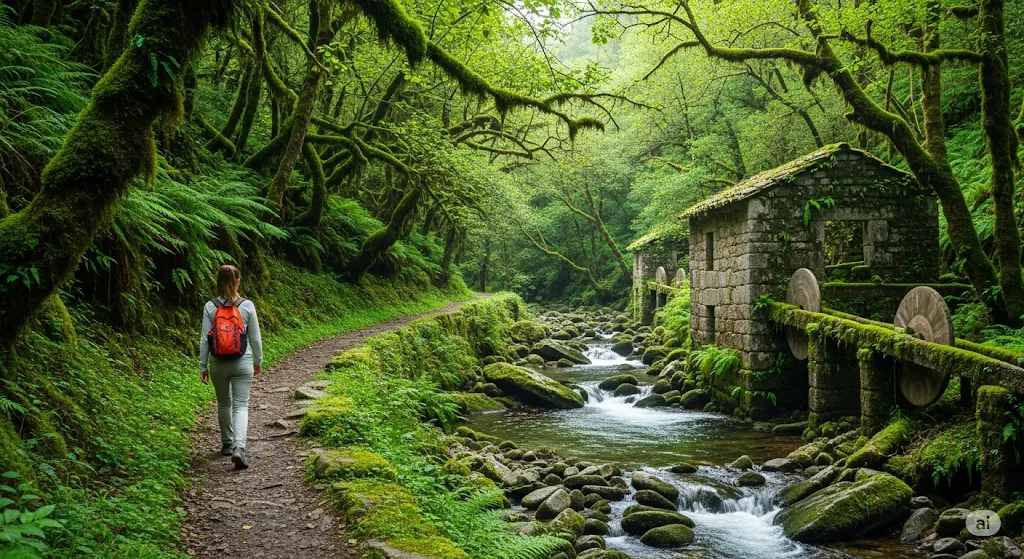
The cycling experience on the Portuguese Way is a delight for the senses. The "bike pilgrim" starts in the monumental Tui, crosses the Miño and enters a landscape always green. Cycles through vineyards of the D.O. Albariño, passes through dense forests and arrives at cities with perfectly preserved historical cascos (town halls) that are often pedestrianized, such as Pontevedra, which makes travel incredibly easy. The speed of the bike allows for enjoying the surroundings in a more panoramic way and making interesting detours, like the Variante Espiritual or the Barosa waterfall.
In summary, the story of the Portuguese Way on a bike is one of perfect symbiosis between a historically traditional route and a new form of pilgrimage. It has managed to adapt without losing its essence, offering an accessible, safe and extraordinary beautiful experience. It has become the great "school" for bike pilgrims, where thousands of people every year discover the magic of traveling to Santiago on two wheels for the first time.
Accommodations on the Route
The Portuguese Cycle Route has 52 verified accommodations along the entire route.
View Stages & AccommodationsPractical Tips for Portuguese Cycle Route
Best Season
Spring (April-June) and autumn (September-October) are the best seasons. Pleasant temperatures and fewer crowds than summer.
Physical Preparation
Train by walking progressively in the months before. Start with short distances and increase. Your body will adapt to the rhythm of the Camino.
What to Pack
Light backpack (max 10% of your weight), worn trekking shoes, breathable technical clothing, raincoat, sunscreen and basic first aid kit.
General Tips
Carry the pilgrim credential, stay hydrated, respect your pace, book accommodation in high season and enjoy the journey without rushing.
FAQ about Portuguese Cycle Route
El recorrido del Camino Portugués en bicicleta desde Tui hasta Santiago tiene una longitud de 118.8 km, que se cubren en aproximadamente dos días. Ourway Travel ofrece un itinerario detallado para ayudarte a planificar tu viaje y asegurarte de sacar el máximo provecho durante tus etapas.
La temporada media, que abarca abril-junio y septiembre-octubre, es considerada la mejor época para realizar el Camino Portugués en bicicleta desde Tui hasta Santiago. Durante esta época se disfruta de un clima agradable sin las multitudes del verano. Ourway Travel te recomienda hacer reservas con anticipación pero no son imprescindibles excepto para los últimos 100 km.
El paquete turístico de Ourway Travel para el Camino Portugués en bicicleta incluye la gestión completa del itinerario, alojamientos seleccionados y seguros. Además, te proporcionamos asistencia técnica en caso de emergencia mecánica y consejos sobre cómo obtener tu credencial de peregrino. Ourway gestiona toda la reserva para que puedas disfrutar plenamente del camino sin preocupaciones.
El Camino Portugués en bicicleta es especialmente popular debido a su perfil moderado y belleza constante, sin grandes subidas o bajadas como los encontrados en algunos tramos del Camino Francés. Ofrece una experiencia más rápida que la ruta a pie, permitiendo obtener tu Compostela en solo 2 etapas. Ourway Travel te ofrece comparativas detalladas para ayudarte a elegir el camino perfecto según tus preferencias y habilidades.
El recorrido del Camino Portugués en bicicleta tiene una dificultad media, con suaves subidas y bajadas a través de los valles y bosques gallegos. Este perfil se adapta bien tanto para ciclistas experimentados como para principiantes que busquen un desafío moderado. Ourway Travel te proporciona consejos específicos sobre cómo prepararte físicamente para este camino.
Para reservar tu viaje en bicicleta por el Camino Portugués con Ourway Travel, simplemente completa nuestro formulario de reserva online. Nuestro equipo se pondrá en contacto contigo para confirmar los detalles y gestionará toda la logística necesaria, desde alojamientos hasta la obtención de tu credencial de peregrino. Ourway Travel te ofrece un servicio personalizado que asegura una experiencia sin complicaciones.
El Camino Portugués en bicicleta es ideal para ciclistas principiantes debido a su perfil moderado y distancia total de solo 118.8 km, cubierta en dos días. A diferencia del camino más montañoso del Norte o del Camino Francés con sus grandes altitudes, el tramo final desde Tui hacia Santiago ofrece una belleza constante sin exigir un nivel avanzado de ciclismo. Ourway Travel destaca esta ruta como la puerta ideal para iniciarse en los caminos de peregrinaje.
Para obtener tu credencial de peregrino, puedes hacerlo antes de empezar el camino en una oficina de turismo o iglesia cercana a Tui. Ourway Travel también puede gestionar este proceso por ti como parte del servicio completo que ofrecemos para simplificar tu experiencia y asegurarnos de que tienes todos los documentos necesarios desde el primer día.

Ready for this adventure?
Let us organize your pilgrimage. We take care of accommodations, transfers and everything you need.