
Stage of the Camino
Stage Description
A stage of the Via Turonensis through inland Poitou-Charentes. The roughly 24 km run through a rolling rural landscape of meadows, small woods and traditional villages. Chenay is a small rural village with a Romanesque church and an old centre.
A rural stage through the heart of Poitou, between Lusignan and the small village of Chenay. The Way leaves the Vienne department and enters Deux-Sèvres through a landscape of gentle hills, hedged meadows and copses of oak and chestnut. The profile is rolling, with no climbs of any note.
The way out of Lusignan descends to the valley of the Vonne, the river that encircles the promontory where the castle of the powerful family that gave kings to Cyprus and Jerusalem once stood. From the valley floor the setting of the town can be fully appreciated, with the Romanesque church of Notre-Dame-et-Saint-Junien on the height. The legend of the fairy Melusine, credited with building the fortress, accompanies the pilgrim over these first kilometres.
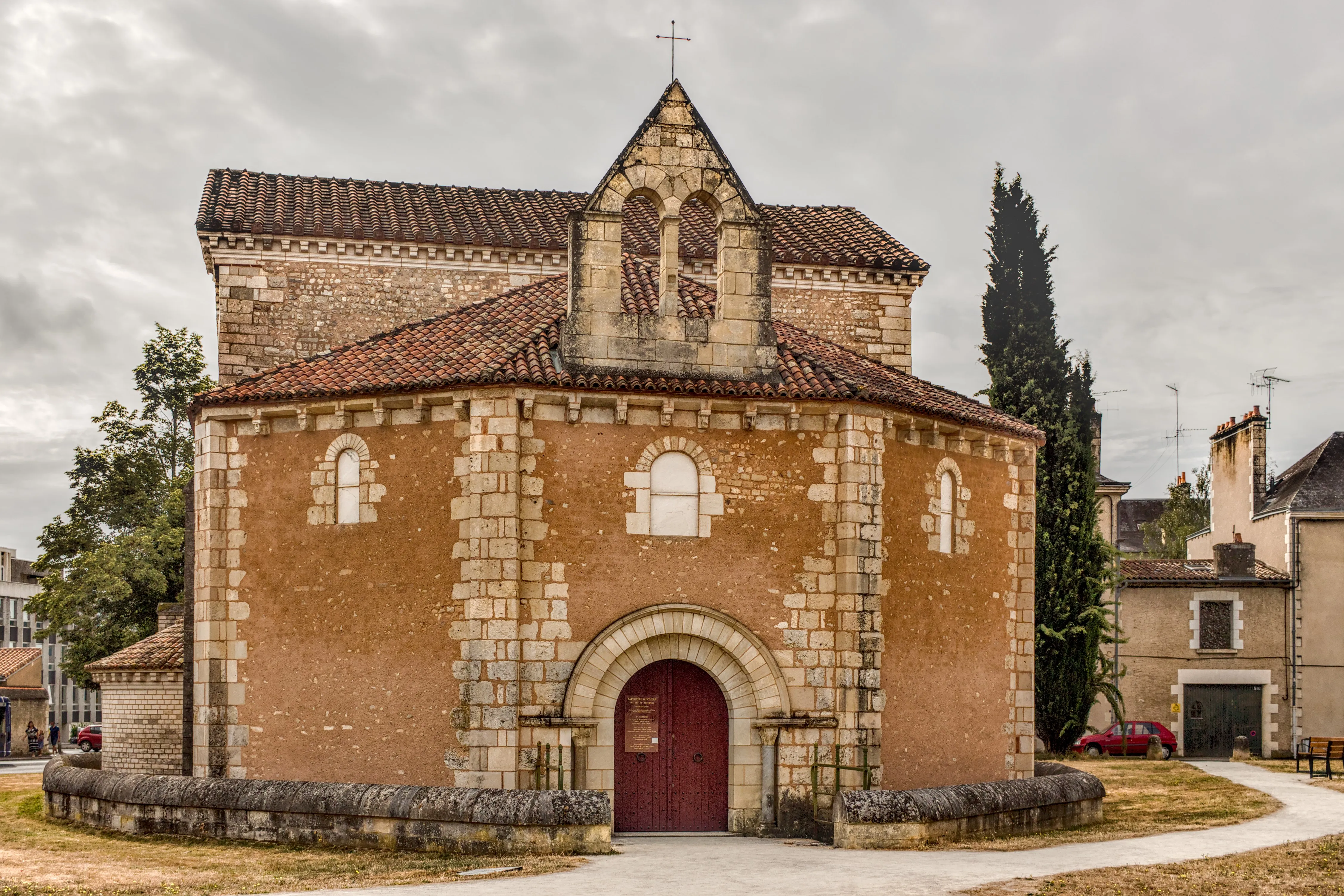
The route continues along farm tracks and local roads with very little traffic to Saint-Sauvant, the main intermediate village, with its Romanesque church and a shop or two. The forest of the same name extends around it. This whole district had a strong Protestant presence, and small family cemeteries can still be seen in the middle of the fields, a reminder of the time when members of the Reformed faith could not be buried in parish graveyards.
After Saint-Sauvant the departmental boundary is crossed. The landscape keeps its character of wooded farmland, with scattered farms of limestone and tiled roofs, and long solitary stretches where hardly anyone is met.
Chenay is a very small village, quiet in its ways, gathered around its church. Services are scarce, so it is advisable to arrive with a confirmed booking and with what is needed for dinner, or having arranged it at the accommodation.
The way out of Lusignan descends to the valley of the Vonne, the river that encircles the promontory where the castle of the powerful family that gave kings to Cyprus and Jerusalem once stood. From the valley floor the setting of the town can be fully appreciated, with the Romanesque church of Notre-Dame-et-Saint-Junien on the height. The legend of the fairy Melusine, credited with building the fortress, accompanies the pilgrim over these first kilometres.
The route continues along farm tracks and local roads with very little traffic to Saint-Sauvant, the main intermediate village, with its Romanesque church and a shop or two. The forest of the same name extends around it. This whole district had a strong Protestant presence, and small family cemeteries can still be seen in the middle of the fields, a reminder of the time when members of the Reformed faith could not be buried in parish graveyards.
After Saint-Sauvant the departmental boundary is crossed. The landscape keeps its character of wooded farmland, with scattered farms of limestone and tiled roofs, and long solitary stretches where hardly anyone is met.
Chenay is a very small village, quiet in its ways, gathered around its church. Services are scarce, so it is advisable to arrive with a confirmed booking and with what is needed for dinner, or having arranged it at the accommodation.
Last updated: 03/10/2026
Start your adventure
Ready to walk this stage?
We design your personalised Camino de Santiago experience.
Plan your CaminoWalk this route with us
Fancy walking this route?
We don't have a ready-made package for this route yet, but we'll organise it around you. Tell us how you'd like to experience it and a specialist will reply within 24 h.
Request your proposal