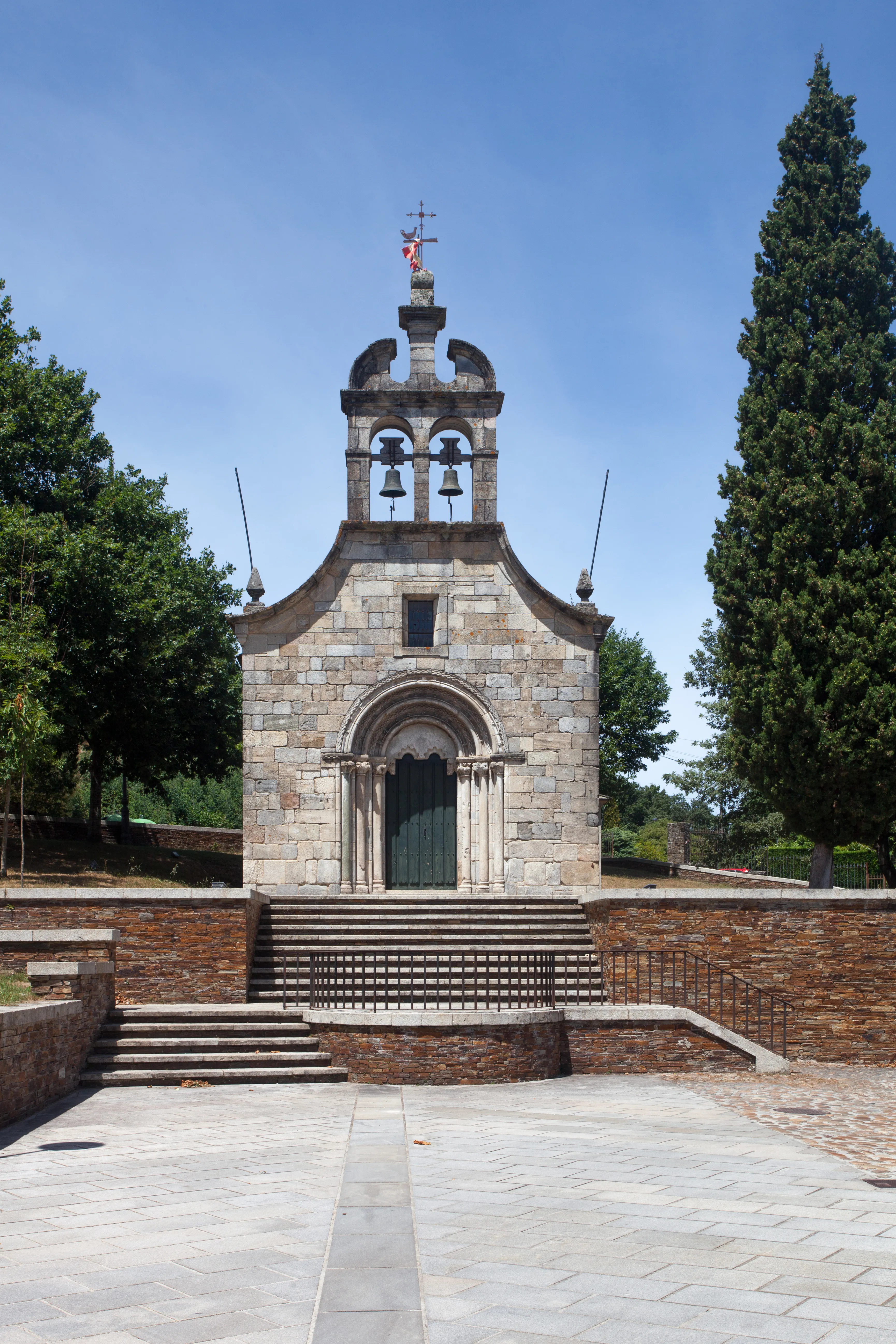
Few places on the Camino break in as many new boots as the stone steps of the Rúa Maior in Sarria: the Sarria – Portomarín stage (22.2 km) is day one for most people walking the Camino Francés. The reason is right there on the map: from Sarria there are just over 100 km left to Santiago, exactly the minimum the Cathedral asks for before it will issue the Compostela.
We know this first day into Portomarín by heart: our agency is based in Palas de Rei, two stages further on, and we look after pilgrims along this stretch right through the season. Here is what you actually need to know — how much it takes out of you, where the famous 100 km marker stone stands, which villages are worth stopping in, and how to round off your first night properly.
The stage in numbers
| Distance | Walking time | Difficulty | Profile | Services |
|---|---|---|---|---|
| 22.2 km | around 6 hours, not counting long stops | moderate | rolling, with most of the climbing packed into the first half and a steep descent at the end | bars, drinking fountains and albergues (pilgrim hostels) spread along almost the entire route |
Map, elevation profile and accommodation for this stage →
How hard is it? The real difficulty of the first stage
On paper it looks harmless: not a single mountain pass, wide tracks and plenty of shade beneath Galician oaks and chestnut trees. In practice, it is one of those stages we Galicians call a rompepiernas — a leg-breaker: up and down without a pause, and by mid-afternoon your legs have been keeping score.
Three things are worth bearing in mind:
- It is your first day. Your body has not found its rhythm yet, the pack feels heavier than it will by day five, and the excitement tends to send people off far too fast. Start gently.
- Almost all the climbing comes in the first half. From Sarria to the Morgade area the ground pulls upwards in short, sharp rises. After that the Camino eases downhill towards the valley of the Miño.
- The final descent punishes the knees. The last few kilometres down to the Belesar reservoir drop in earnest. If you walk with poles, this is their moment; if not, shorten your stride and take it slowly.
At an easy pace, with two or three stops along the way, anyone in reasonable shape will finish this stage and enjoy it. It is not a day for setting records — it is the day you settle into Camino mode.
The 100 km marker stone: the photo everyone stops for
A little past Morgade, close to Ferreiros, you come to the most photographed landmark on the whole Camino Francés: the marker stone reading 100 km to Santiago. It is covered in signatures, scribbled messages and little stacks of stones, and in high season a small queue forms for photographs.
Two notes from the locals:
- It is not accurate to the metre. Official measurements have changed over the years, and you will pass other markers whose decimals seem to contradict one another. It makes no difference: the "100" is the symbolic one, and that is where the photo happens.
- If you want the photo without a crowd, set off early. The bulk of pilgrims reach this point mid-morning. Leave Sarria at first light and you will have it almost to yourself.
The route, section by section
Sarria and the climb to Barbadelo (km 0 – 4)
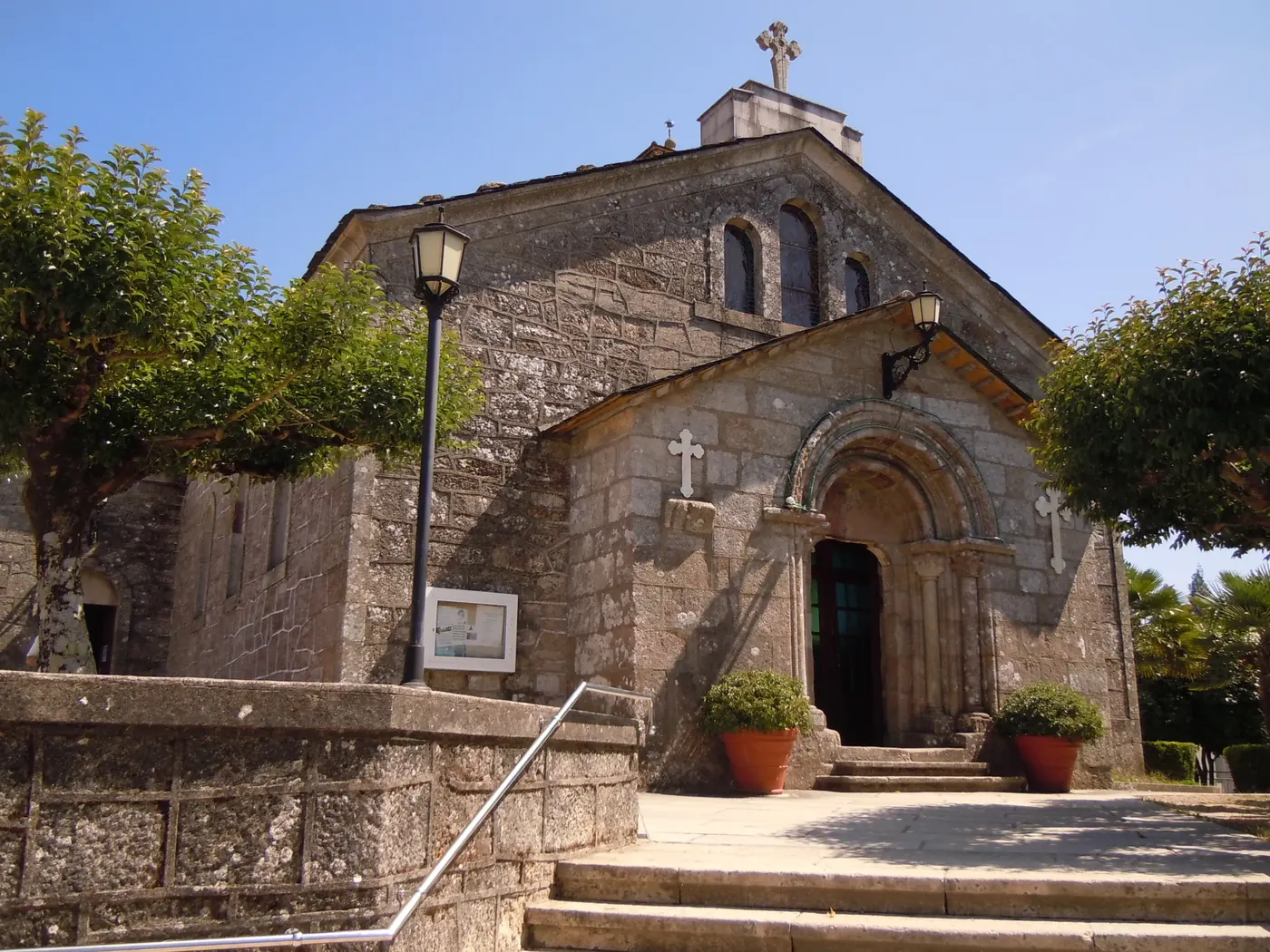
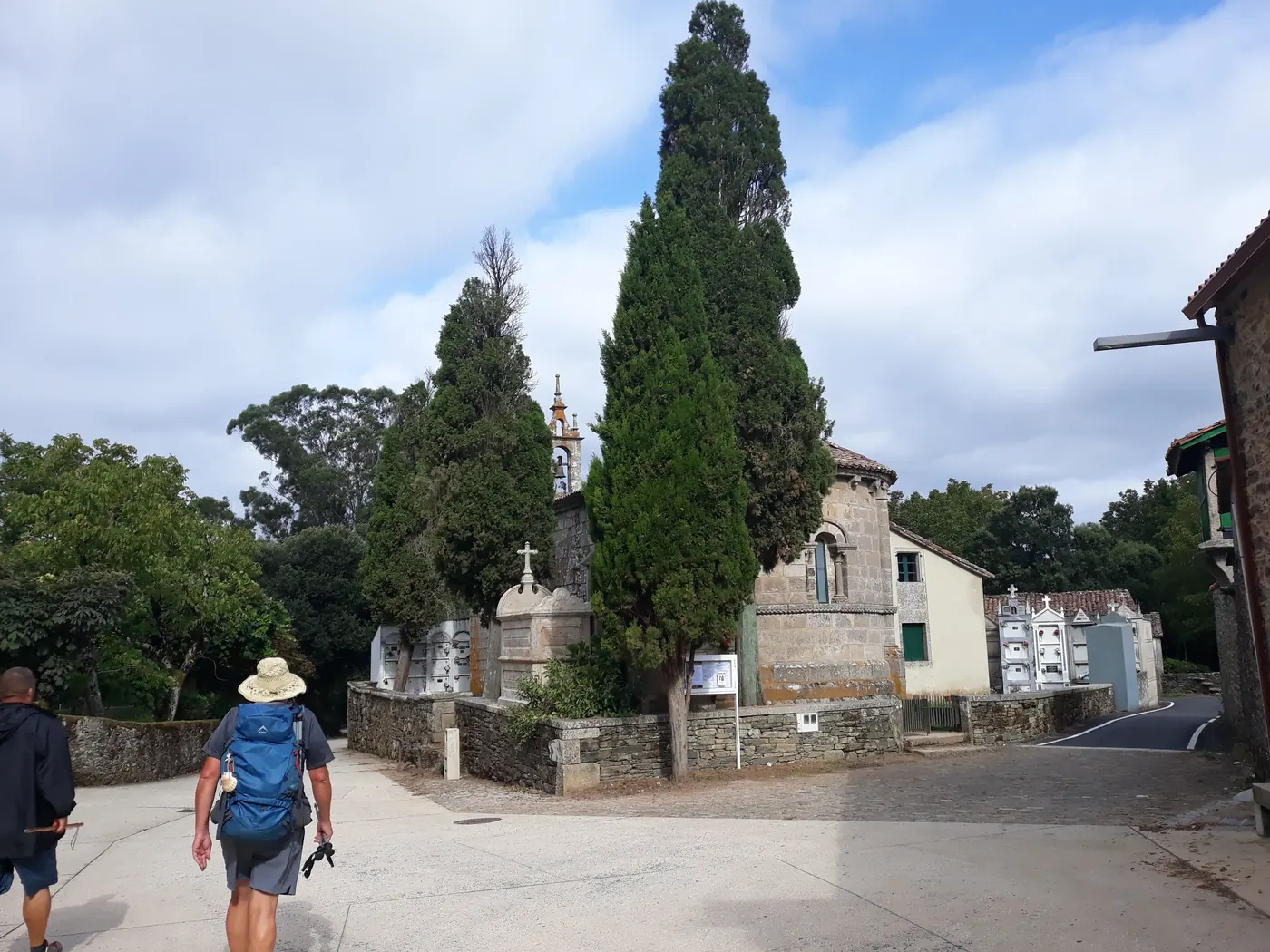
You leave the old quarter of Sarria behind, passing the convent of La Magdalena and crossing the river by the medieval bridge of A Áspera. Tarmac soon gives way to corredoiras — old country lanes — running between drystone walls. At Barbadelo comes the first stop with real history behind it: the Romanesque church of Santiago, built in the 12th century, whose carved doorway is well worth the five-minute detour off the path. There is usually a stamp to be had.
From Barbadelo to Ferreiros: village Galicia (km 4 – 13)
This middle section is inland Lugo at its purest: tiny hamlets such as Rente, Peruscallo and Morgade, hórreos (raised granaries), cows crossing the track, and the odd neighbour selling fruit or home-made crêpes at their front door. Bars turn up every few kilometres, so there is no need to carry a whole day's food. Past the 100 km marker you reach Ferreiros, the classic choice for the long stop: roughly the halfway point of the stage and a good place for a hot meal.
The balcony over the Miño (km 13 – 19)
From Ferreiros the Camino strings one hamlet after another — Mirallos, A Pena, Mercadoiro, Vilachá — while the landscape gradually opens out. Somewhere on the descent you will catch your first glimpse of the sheet of water held back by the Belesar reservoir, which dams the river Miño here, and beyond it the outline of Portomarín on top of its hill. It is one of the great views of the day: stop and take it in, because on a hurried descent it slips straight past you.
The bridge and the steps up to Portomarín (km 19 – 22.2)
The stage finishes by crossing the bridge over the Miño, long and high above the reservoir. On the far side, a steep flight of steps crowned by an archway — the capela das Neves, all that survives of the old medieval bridge — takes you straight up into the town. It is the sting in the tail of the day and, on first-day legs, you certainly feel it. At the top, the reward: your first stage is behind you.
Where to get your stamps and where to eat along the way
Stamps. Remember the two stamps a day rule for your credencial — the pilgrim's passport. We cover it in full in our guide to the final 100 km. On this stage it is an easy rule to keep: the church at Barbadelo, the bars and albergues at Morgade or Ferreiros, and your accommodation in Portomarín. Our advice: stamp your credencial wherever you were going to stop anyway — a coffee, lunch — rather than adding stops just to collect ink.
Food. Have a proper breakfast in Sarria before you set off, or at the first bars on the Barbadelo stretch. The midday stop works very well around Ferreiros, where you will find menús del peregrino — the pilgrim's set menu — and good home cooking. And leave room for dinner in Portomarín: it is a classic end of stage, with plenty of tapas bars and restaurants around the square and along the main street. If you travel with us, we will point you towards places we have tried and trust, matched to what you fancy — no obligations and no commissions.
Portomarín: the town that moved uphill
The story of Portomarín is unlike any other on the Camino. In the 1960s, the building of the Belesar reservoir condemned the old town, which vanished beneath the waters of the Miño. Before the flooding, its people took their most valuable buildings apart and rebuilt them on top of the Monte do Cristo, where Portomarín stands today.
The centrepiece of that move is the church of San Xoán (also known as San Nicolao): a 12th-century Romanesque fortress-church linked to the Order of St John, dismantled stone by stone and raised again where you see it now. Look closely at the walls and you can still make out the numbers carved into each block so that it could be put back together in the right order. And when the reservoir drops in summer, the ruins of the old town surface through the water: the foot of the old bridge and the walls of the houses that never moved.
Take a stroll at dusk. After a day of hamlets and woodland, Portomarín is a place to be enjoyed slowly.
Tips for your first night (and for getting off on the right foot)
- Shower, stretch and check your feet the moment you arrive. A blister dealt with on day one is a footnote; ignored, it can sour the whole week.
- Eat early and sleep long. The second stage, Portomarín to Palas de Rei, is a little longer (24.8 km) with more climbing at the start: you will want to set off rested.
- Pack your bag the night before, not in the morning. You will get away earlier and leave nothing behind.
- Book your accommodation ahead if you are travelling between May and September: Portomarín is where almost everyone ends the day, and the beds go fast.
- Walk light. If there is one thing we have learned from looking after pilgrims, it is that luggage belongs anywhere but on your back: with stage-by-stage luggage transfers you carry nothing more than a small daypack with water, a rain jacket and what you need for the day.
Would you like us to organise it for you?
OurWay Travel is a licensed Galician agency (XG-LU-000236) based in Palas de Rei, right on the Camino Francés. Our Camino Francés from Sarria package (from 410 €) includes accommodation booked stage by stage, luggage transfers, your credencial and 24/7 local support — and there is a cycling version too. You will find the whole route explained in our guide to the final 100 km from Sarria, and the complete stage-by-stage detail on the Camino Francés page.
Frequently asked questions
How many kilometres is it from Sarria to Portomarín? 22.2 km along the official route of the Camino Francés. Depending on how it is measured (and where you sleep at either end), you will see figures anywhere between 22 and 23 km. Allow around 6 hours of actual walking.
Where exactly is the 100 km marker stone? Between Morgade and Ferreiros, a good third of the way into the stage. It is impossible to miss: it is the only marker with a queue of people waiting for a photo.
Are there enough bars and drinking fountains along the way? Yes — this is one of the best-served stages on the entire Camino: there is somewhere to stop every few kilometres. Even so, carry at least a litre of water, especially in summer.
Is it a good stage to start on if I am not particularly fit? Yes, as long as you take it steadily: there are no big mountains, but the rolling profile and the final descent make themselves felt on day one. Setting off early, stopping often and sending your pack on ahead all make a real difference.
Which stage comes after Portomarín? Day two runs from Portomarín to Palas de Rei (24.8 km). After that come Palas de Rei – Arzúa (28.5 km), Arzúa – O Pedrouzo (19.3 km) and the final stage, O Pedrouzo – Santiago (19.4 km).
The first stage sets the tone for the whole trip. If you would rather set out with nothing but the clothes on your back, drop us a line: a bed booked in Portomarín and your suitcase waiting for you when you arrive.
If you would rather we took care of the logistics, have a look at our organised trip from Sarria.