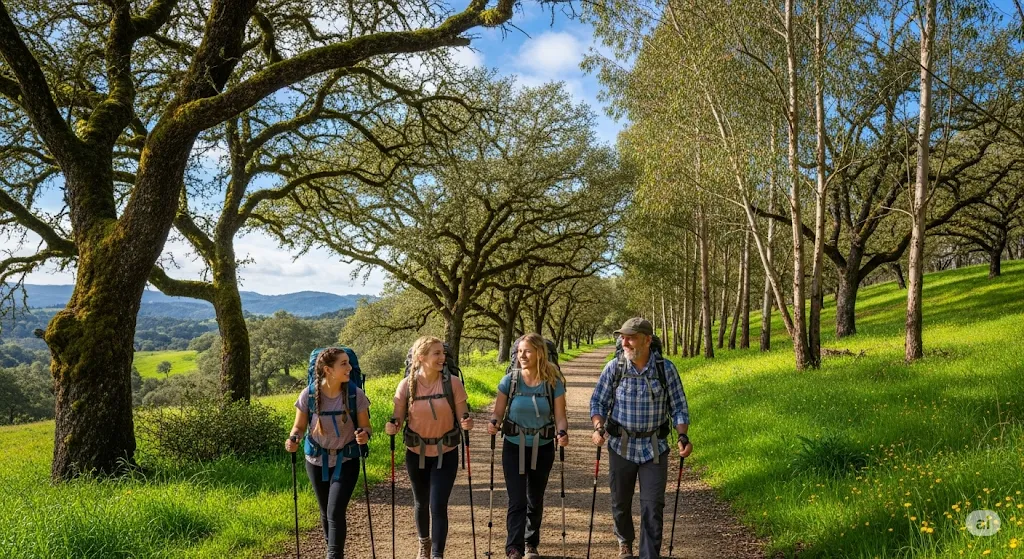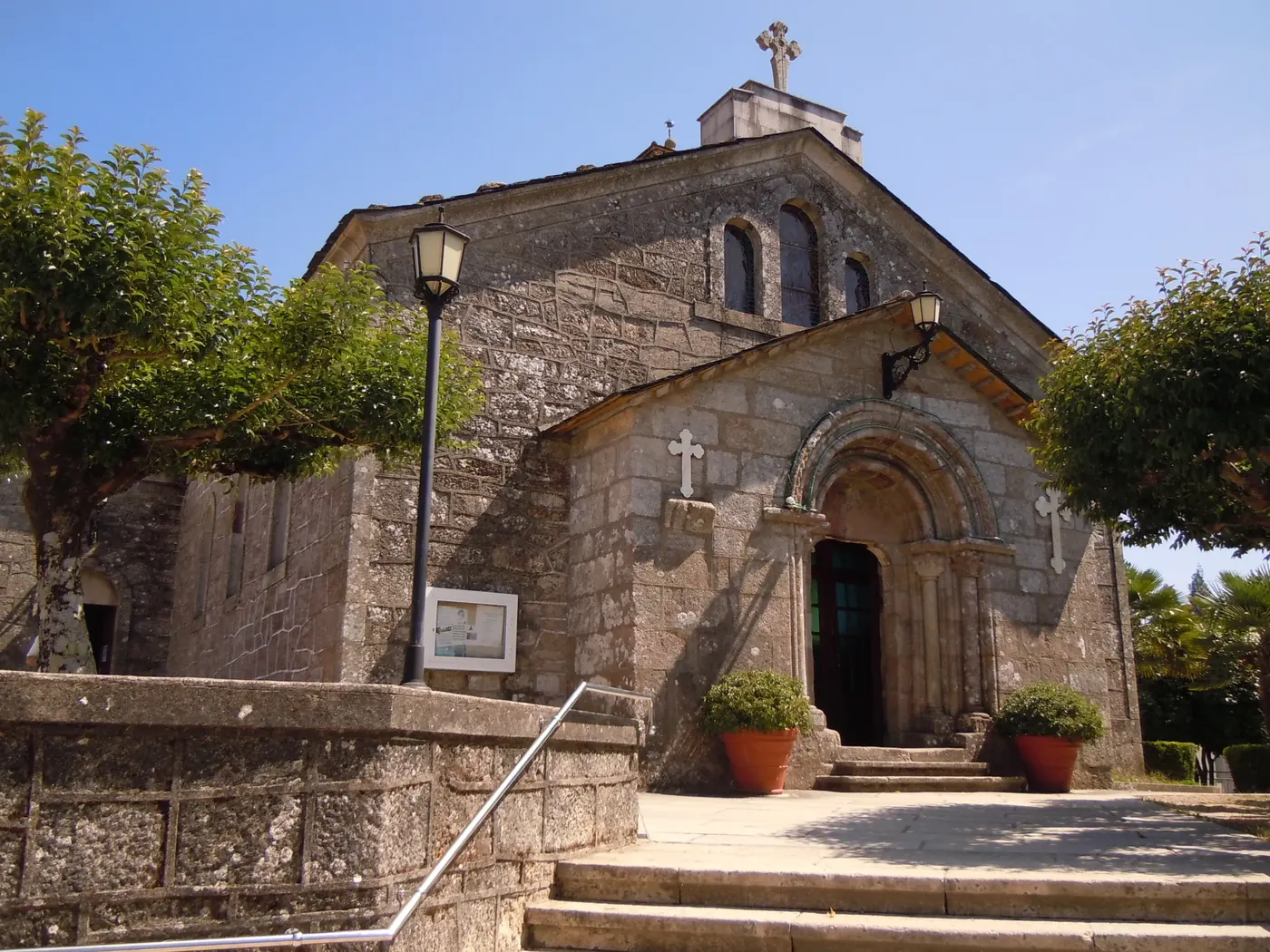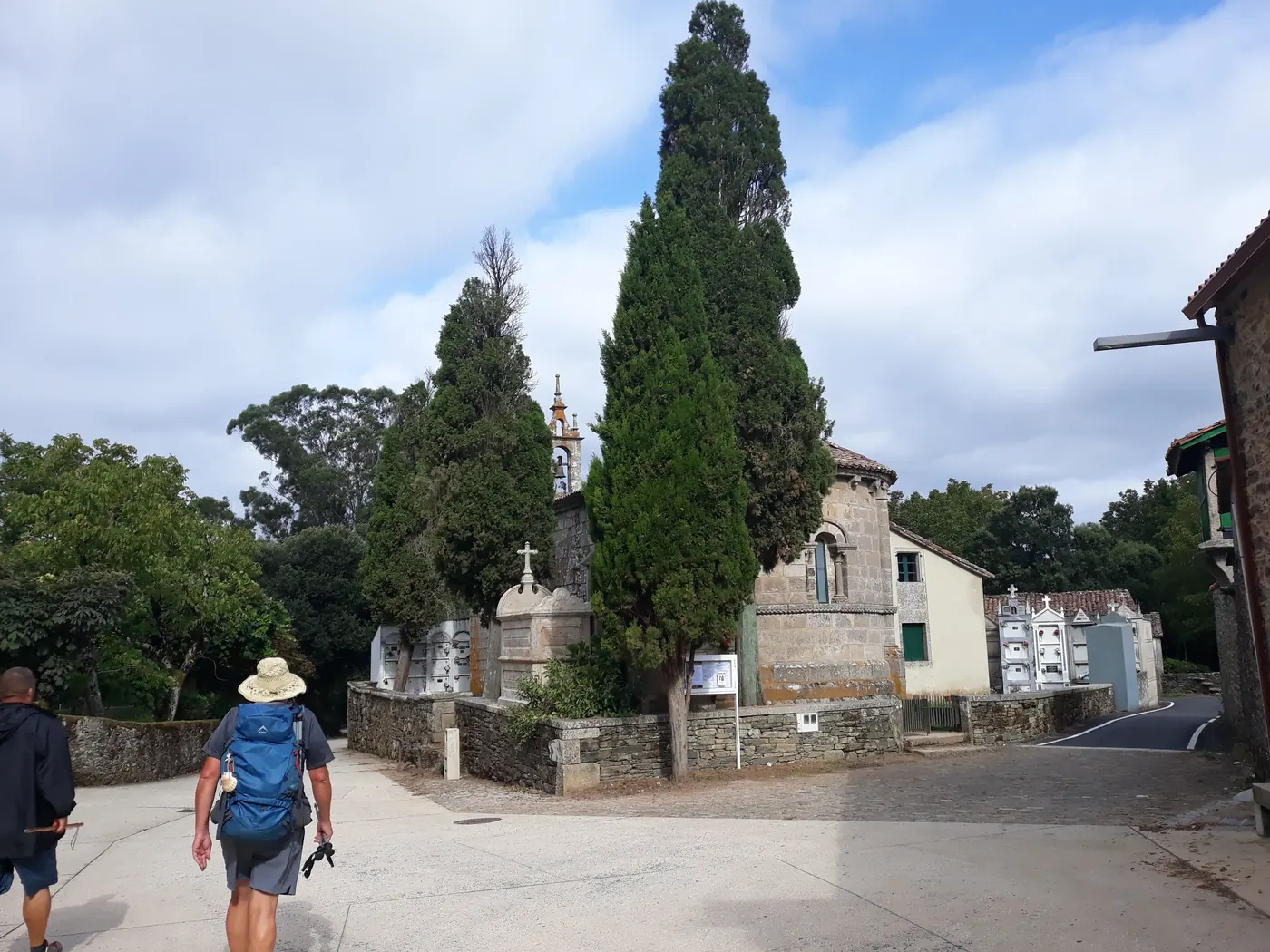
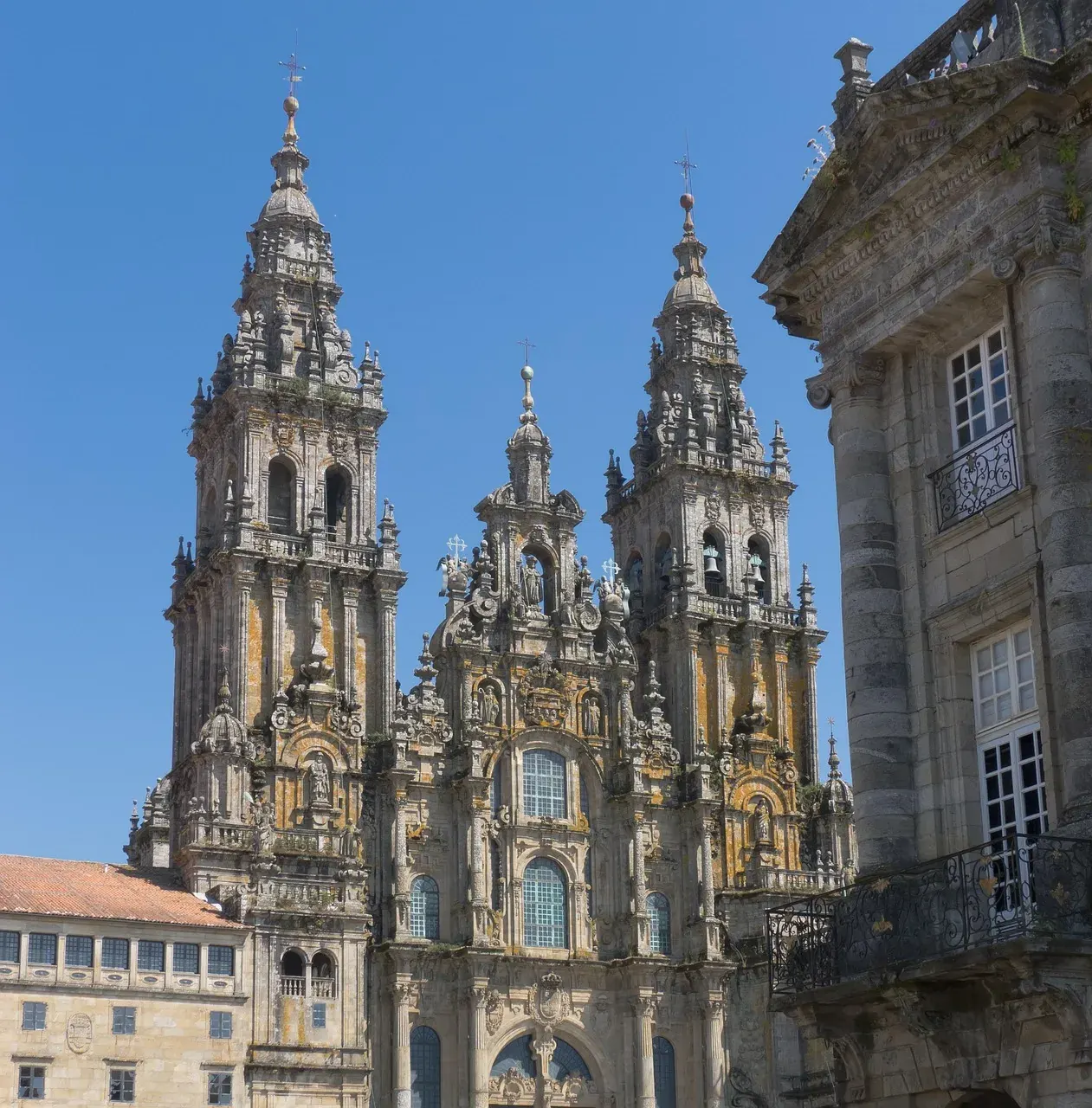
The final stage of the Camino Francés is like no other. It is 19.4 km from O Pedrouzo to the Praza do Obradoiro, roughly 4.5 hours of moderate walking, and yet nobody remembers it for the climbs or the scenery. What people remember is what goes on inside: that mix of longing to arrive and sadness that it is ending. After four days on the road from Sarria and almost 95 km in your legs, today the bells ring for you.
We take you through the stage village by village, how you walk into Santiago, what to do once you are standing in front of the Cathedral, and how to collect your Compostela without queueing for hours. Coming straight from the previous stage? Here is our account of Arzúa – O Pedrouzo; and for the full picture of the whole stretch, our guide to the final 100 km from Sarria.
The stage at a glance
| Distance | Estimated time | Difficulty | Key waypoints |
|---|---|---|---|
| 19.4 km | around 4.5 hours of walking, not counting stops | moderate — two climbs you will certainly feel (up to the airport and up to Monte do Gozo) and an urban stretch at the end | San Antón, Amenal, San Paio, Lavacolla, San Marcos, Monte do Gozo, San Lázaro, Porta do Camiño and Obradoiro |
Map, elevation profile and accommodation for this stage →
Leaving O Pedrouzo: eucalyptus woods and head torches
Plenty of pilgrims set off from O Pedrouzo in the dark, between 5.30 and 7.00 in the morning, to reach Santiago in time for the midday Pilgrim's Mass. If that is your plan, take a head torch or a torch: the first few kilometres run through eucalyptus woods so dense that not even the moonlight gets in, and the yellow arrows are hard to pick out in the dark. That procession of little lights moving between the tree trunks is, in fact, one of the images pilgrims carry away from this stage.
The going is easy: dirt tracks between San Antón and Amenal, with the Brandelos river murmuring away in the background. At Amenal the first proper climb of the day begins, a steady pull of some 2 km up towards the airport fence. It is easier than it looks: it is early, the air is cool and your legs know exactly what they are doing by now.
San Paio and Lavacolla: the wash before entering the city
At the top, the Camino skirts the runway of Santiago airport — it is not unusual for a plane to pass literally overhead, a curious contrast after four days of hamlets and carballeiras, the Galician oak woods — before dropping down to the little village of San Paio, with its church and a couple of places to stop for breakfast.
A little further on comes Lavacolla, and this is a spot worth slowing down for, if only in your head. In the Middle Ages, pilgrims would stop at its stream to give themselves a thorough wash before entering Santiago: after weeks on the road, they wanted to present themselves clean before the Apostle. The Codex Calixtinus itself, the twelfth-century pilgrim guide, records the custom. Nobody bathes in the brook nowadays, but the gesture behind it has not changed: Lavacolla is where you start getting ready to arrive.
Monte do Gozo: the first sight of the towers
From Lavacolla there are around 5 km of gentle climbing through Vilamaior and San Marcos up to Monte do Gozo, at some 370 metres above sea level. The name gives the game away — "mount of joy" — because this is where pilgrims caught their first sight of the Cathedral towers. Medieval tradition had it that the first of the group to spot them earned the title of "king" of the pilgrimage.
These days you have to hunt a little for the right angle — the city has grown and so have the trees — but from around the chapel of San Marcos the towers still appear in the distance, and the effect still works: this is where a great many people get their first lump in the throat. Under 5 km to go, nearly all of it downhill. It is a good place for one last unhurried stop before the streets begin.
Walking into Santiago: San Lázaro, Porta do Camiño and the old town
The descent from Monte do Gozo drops you into the district of San Lázaro, and the one ugly stretch of the day begins: a couple of kilometres of pavements, roundabouts and traffic. Be patient — it is the toll you pay for walking into a real, working city.
The reward comes soon enough. Along the rúa dos Concheiros and the rúa de San Pedro, with the towers showing at the end of the street, you reach the Porta do Camiño, the historic gateway through which pilgrims on the Francés have always entered the old town. From there everything changes: stone, arcades, the Praza de Cervantes, the Acibechería... and the passageway under the Arco de Palacio, where there is almost always a gaita — the Galician bagpipe — playing. You cross under the arch, the Praza do Obradoiro opens out and there it is: the whole Cathedral façade, all at once, after 114 km.
You have made it to the Obradoiro: what to do when you arrive
First of all, nothing. Truly: sit down in the middle of the square, take your rucksack off and stay a while. You will see pilgrims in tears, hugging one another, lying flat on their backs looking up at the towers, taking the photo with their boots in the air. Everyone arrives in their own way and every way is the right one. Then, in your own time:
- The embrace of the Apostle: a staircase behind the high altar takes you up to the camarín, the little chamber where you embrace the figure of St James, and beneath the altar you can visit the crypt with his relics. It is the gesture that has closed the pilgrimage for centuries.
- The Pilgrim's Mass: there are services every day (the midday one is the busiest; check the Cathedral's current timetable). Large rucksacks are not allowed inside — leave yours at your accommodation or in a left-luggage locker.
- The botafumeiro: the great censer does not swing every day. It flies at the major solemnities of the liturgical calendar (25 July, the feast of St James, among them) and whenever a group requests it from the Cathedral. Seeing it is a matter of luck or of dates: if you happen to be there, you will never forget it.
The Compostela: the Pilgrim's Reception Office
The Compostela — the Latin document certifying your pilgrimage — is collected at the Pilgrim's Reception Office, on rúa das Carretas, a couple of minutes from the Obradoiro. If you have come from Sarria with your two daily stamps in your credencial — the pilgrim's passport — you have already met the requirement: the full rule (100 km on foot, 200 km by bike) is explained in our guide to the final 100 km.
In high season the office works with pre-registration and numbered slots, and there can be a wait around midday, when everybody arrives at once. A simple trick: go first thing the following morning — no queue and no rush.
And the day after?
Our advice: do not leave Santiago on the day you arrive. The city deserves a full day at the very least — the Mercado de Abastos, the squares around the Cathedral, a proper celebratory seafood feast.
And if your legs are asking for more Camino? There is life after Santiago: the route carries on to Fisterra and Muxía, the "kilometre zero" on the Atlantic, where pilgrims who do not want to stop finish facing the open sea. That is another 3–4 stages and, for many, the wildest and most beautiful part of the whole journey. We will be giving it a guide of its own on the blog.
How we organise it at OurWay
OurWay Travel is a licensed Galician agency (XG-LU-000236) based in Palas de Rei, right on the Camino Francés itself. Our Camino Francés from Sarria package includes pre-booked accommodation, luggage transfers from stage to stage, the credencial and 24/7 local support — so that on your final day all you have to do is walk, arrive and let it get to you.
Frequently asked questions
How many kilometres is it from O Pedrouzo to Santiago? 19.4 km along the official route of the Camino Francés, around 4.5 hours of walking at an easy pace. It is the last of the 5 classic stages from Sarria.
What time do you need to leave O Pedrouzo to make the midday Mass? Setting off between 6.00 and 7.00 in the morning puts you in the Obradoiro between 10.30 and 12.00, depending on your pace and your stops. Bear in mind that the busiest Mass fills up well in advance, and that you cannot go in with a large rucksack.
When does the botafumeiro swing at Santiago Cathedral? There is no daily schedule: it flies at the great liturgical solemnities of the year — 25 July, the feast of St James the Apostle, among them — and when a group specifically requests it from the Cathedral. Check the dates on the Cathedral's website before you travel.
How many stamps do I need in my credencial to earn the Compostela from Sarria? Two a day for the whole route, which is the rule for the final 100 km. Any stamp with an identifiable name will do — the one from your accommodation on arrival and the one from the bar where you have lunch cover the day between them.
Where do you collect the Compostela when you arrive in Santiago? At the Pilgrim's Reception Office on rúa das Carretas, just beside the Obradoiro. Hand over your stamped credencial; if you arrive in high season and there is a queue, going first thing the next morning is usually the easier option.
Would you like to reach the Obradoiro this year? Tell us your dates and we will organise your whole Camino from Sarria: accommodation, luggage, the credencial and proper local support.
If you would rather we took care of the logistics, have a look at our organised trip from Sarria.