
Stage of the Camino
Stage Description
A stage that ends in Melle, a small medieval town famous for its ancient Carolingian silver mines (open to visitors as an industrial archaeological site) and for its three Romanesque churches, listed as UNESCO World Heritage as part of the Chemins de Saint-Jacques en France. The roughly 26 km run through the Poitevin bocage.
The Way continues across the countryside of Deux-Sèvres to Melle, one of the towns with the richest Romanesque heritage on the whole Via Turonensis. The stage is of moderate length with a rolling profile, through a landscape of hedgerows, meadows and small valleys.
From Chenay the route follows country lanes towards Chey and Sepvret. Within the commune of Sepvret rises the Sèvre Niortaise, the river that flows through Niort and reaches the Atlantic after crossing the marshes of the Marais Poitevin. These are hamlets of pale stone, with wash houses and old farms, where farming life sets the rhythm.
The next stretch passes through Saint-Léger-de-la-Martinière, already at the gates of Melle. The district, known as the Pays Mellois, preserves a remarkable concentration of Romanesque churches and the traces of its Protestant past.
Melle owes its origin to the argentiferous lead mines worked in Carolingian times, which yielded the silver used to strike coins for the Frankish kings. The galleries, among the oldest in Europe open to the public, can be visited. The town also has three Romanesque churches: Saint-Hilaire, inscribed on the World Heritage List as part of the Routes of Santiago de Compostela in France and famous for the horseman carved above its north doorway; Saint-Pierre, with its elegant chevet; and Saint-Savinien, the oldest.
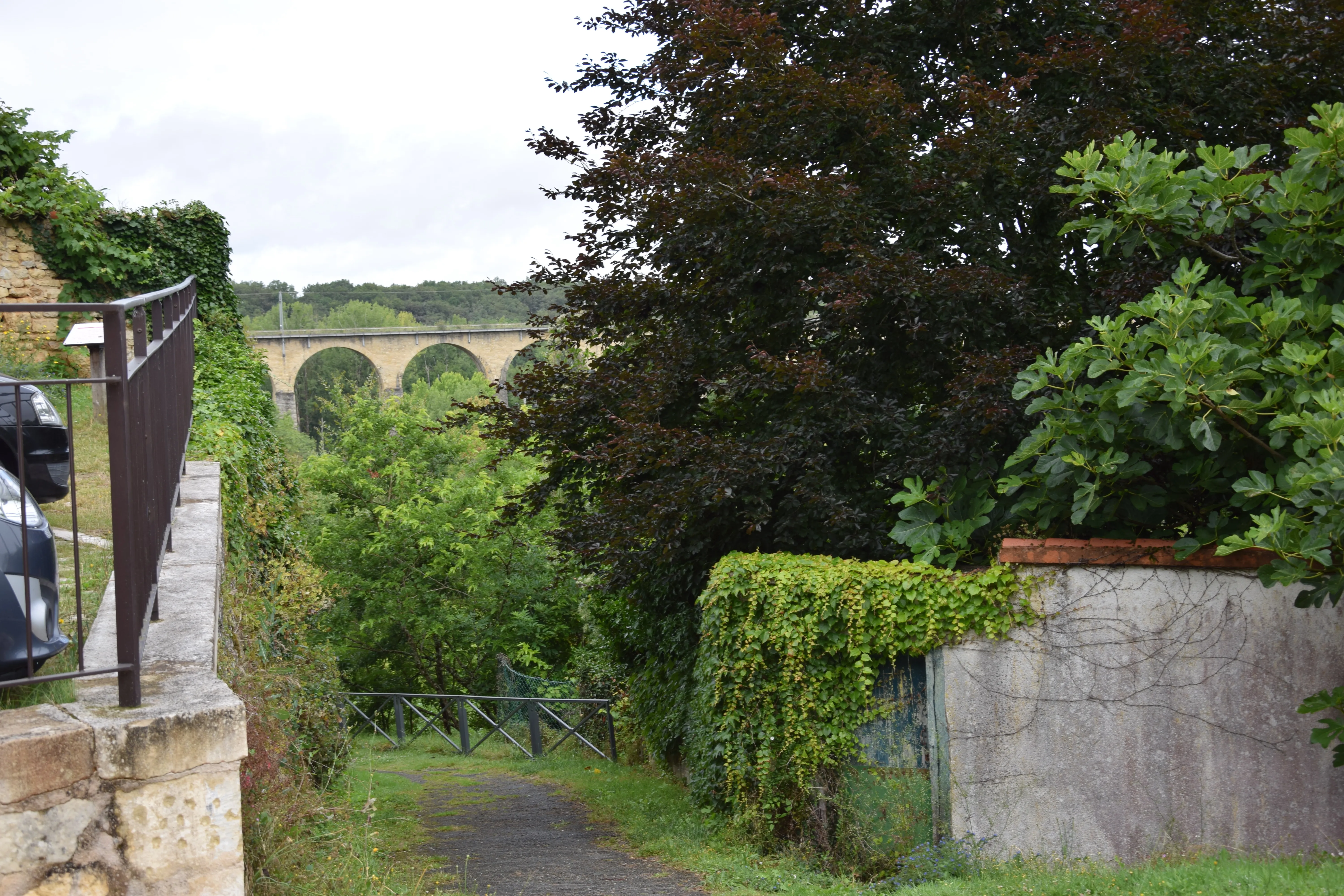
A tree-lined path, the Chemin de la Découverte, encircles the old town along the line of a former railway. Melle has shops, restaurants and accommodation, and is a stage end where it is worth setting aside time for the visit.
From Chenay the route follows country lanes towards Chey and Sepvret. Within the commune of Sepvret rises the Sèvre Niortaise, the river that flows through Niort and reaches the Atlantic after crossing the marshes of the Marais Poitevin. These are hamlets of pale stone, with wash houses and old farms, where farming life sets the rhythm.
The next stretch passes through Saint-Léger-de-la-Martinière, already at the gates of Melle. The district, known as the Pays Mellois, preserves a remarkable concentration of Romanesque churches and the traces of its Protestant past.
Melle owes its origin to the argentiferous lead mines worked in Carolingian times, which yielded the silver used to strike coins for the Frankish kings. The galleries, among the oldest in Europe open to the public, can be visited. The town also has three Romanesque churches: Saint-Hilaire, inscribed on the World Heritage List as part of the Routes of Santiago de Compostela in France and famous for the horseman carved above its north doorway; Saint-Pierre, with its elegant chevet; and Saint-Savinien, the oldest.
A tree-lined path, the Chemin de la Découverte, encircles the old town along the line of a former railway. Melle has shops, restaurants and accommodation, and is a stage end where it is worth setting aside time for the visit.
Last updated: 03/10/2026
Start your adventure
Ready to walk this stage?
We design your personalised Camino de Santiago experience.
Plan your CaminoWalk this route with us
Fancy walking this route?
We don't have a ready-made package for this route yet, but we'll organise it around you. Tell us how you'd like to experience it and a specialist will reply within 24 h.
Request your proposal