Stage of the Camino
Stage Description
Second part of the day between Negreira and Olveiroa for those who have spent the night in Vilaserío. It covers just over twenty kilometres across open, very sparsely populated country where services are scarce. From Vilaserío the Camino passes O Cornado and follows long, straight forest tracks laid out by land consolidation, between eucalyptus and meadows, to As Maroñas and Santa Mariña, where the AC-400 road must be crossed with great care. The route then climbs through A Gueima towards the slopes of Monte Aro, crowned with wind turbines, and from the heights offers wide views over the Xallas valley and the Fervenza reservoir. A steep descent leads to Lago, in Mazaricos, and the final stretch crosses the Xallas river at A Ponte Olveira before reaching Olveiroa, a stone hamlet in the municipality of Dumbría where the route prepares to fork towards Fisterra or Muxía.
Those who split the Negreira to Olveiroa stage at Vilaserío face the longer section the next day, about 20.8 kilometres. The steepest climbs are behind them, but it is not an easy day: the route crosses the Xallas plateau with few villages and services, long stretches exposed to sun and wind, and the climb onto the foothills of Monte Aro before the final descent.
Leaving Vilaserío beside the municipal albergue, a short stretch of road leads to O Cornado, about two kilometres on. From there the Camino takes geometric forest tracks typical of land consolidation, lined at first with eucalyptus and later with meadows and maize fields. It is a section of wide horizons and no major landmarks that leads to As Maroñas.
A paved track links As Maroñas with Santa Mariña, some eight kilometres from Vilaserío, a small parish of Mazaricos with a church, bar and albergue. Here pilgrims must cross the AC-400 road with great care, as cars travel at high speed. Beyond A Gueima, the Camino climbs past farms towards Monte Aro; near Vilar de Castro yellow and green arrows coexist, so it pays to watch the waymarking closely.
The reward comes on the steep descent, which overlooks the Xallas valley and the large Fervenza reservoir. At the foot of the slope lies Lago, with bars and a private albergue. The final stretch continues through A Picota and Quintáns to A Ponte Olveira, where the Xallas river is crossed; according to local tradition, in 1809 the people of the area tried here to halt the advance of French troops.
Shortly afterwards the route reaches Olveiroa, already in the municipality of Dumbría. The hamlet preserves restored stone houses, hórreos granaries and the atmosphere of rural Galicia, and has an albergue, lodgings and places to eat. From Olveiroa the Camino continues to Hospital, where the branches to Fisterra and Muxía part ways.
Leaving Vilaserío beside the municipal albergue, a short stretch of road leads to O Cornado, about two kilometres on. From there the Camino takes geometric forest tracks typical of land consolidation, lined at first with eucalyptus and later with meadows and maize fields. It is a section of wide horizons and no major landmarks that leads to As Maroñas.
A paved track links As Maroñas with Santa Mariña, some eight kilometres from Vilaserío, a small parish of Mazaricos with a church, bar and albergue. Here pilgrims must cross the AC-400 road with great care, as cars travel at high speed. Beyond A Gueima, the Camino climbs past farms towards Monte Aro; near Vilar de Castro yellow and green arrows coexist, so it pays to watch the waymarking closely.
The reward comes on the steep descent, which overlooks the Xallas valley and the large Fervenza reservoir. At the foot of the slope lies Lago, with bars and a private albergue. The final stretch continues through A Picota and Quintáns to A Ponte Olveira, where the Xallas river is crossed; according to local tradition, in 1809 the people of the area tried here to halt the advance of French troops.
Shortly afterwards the route reaches Olveiroa, already in the municipality of Dumbría. The hamlet preserves restored stone houses, hórreos granaries and the atmosphere of rural Galicia, and has an albergue, lodgings and places to eat. From Olveiroa the Camino continues to Hospital, where the branches to Fisterra and Muxía part ways.
Last updated: 13/09/2026
Where to Sleep
Accommodations in this Stage
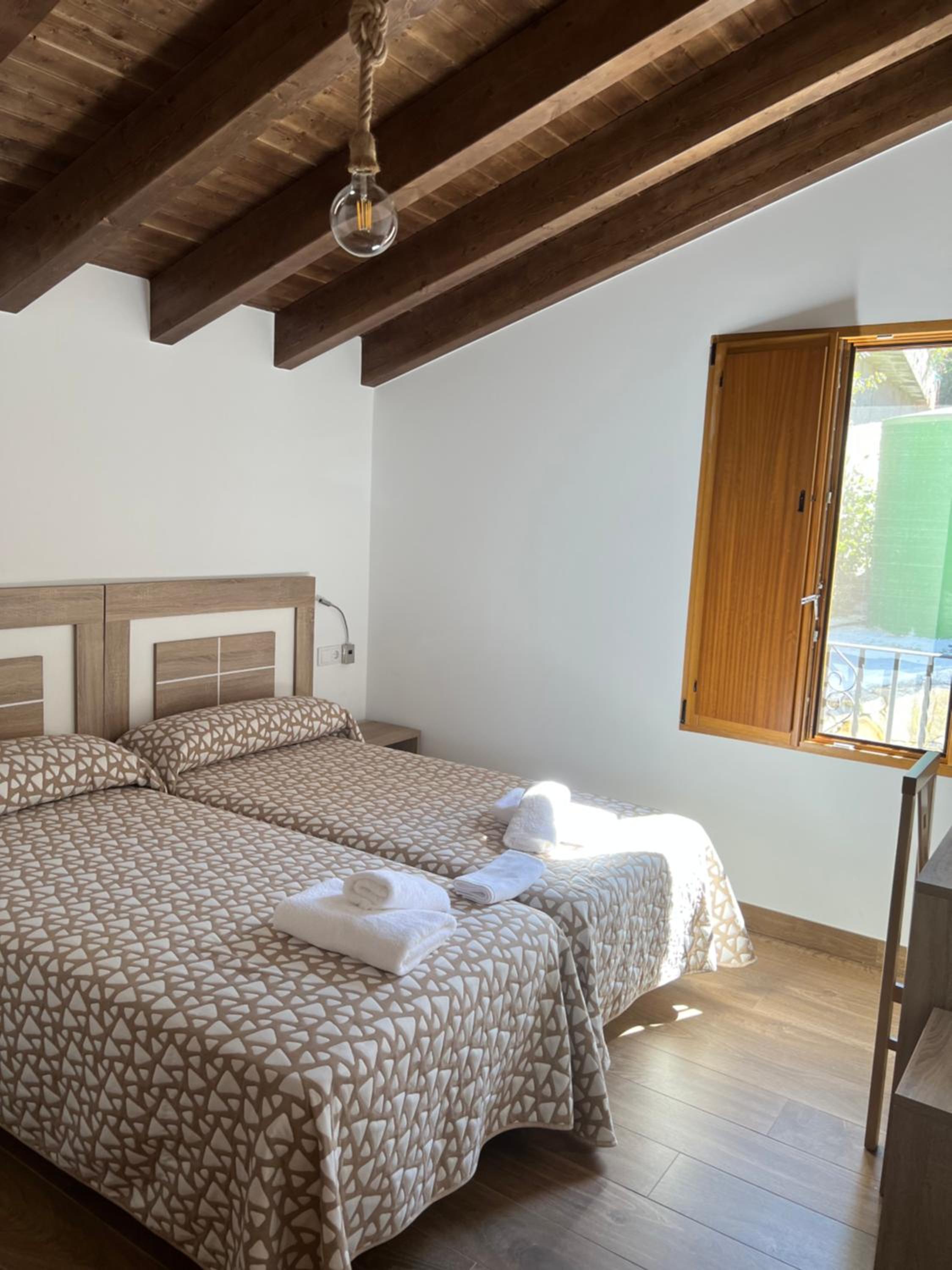
Find the perfect place for your rest in Vilaserío o Olveiroa.
Start your adventure
Ready to walk this stage?
We design your personalised Camino de Santiago experience.
Plan your CaminoWalk this route with us
We take care of every detail
Accommodation booked stage by stage, your backpack waiting when you arrive and someone on the phone if anything goes wrong.