
Camino de Santiago
Way to Finisterre and Muxía
Lives the epilogue of the Camino: the route to Fisterra and Muxía from Santiago. Discover the Costa da Morte, the "end of the world" pagan, and spirituality by the Atlantic Ocean.
Organize your Way to Finisterre and MuxíaLast updated: 21/05/2024
The Route
General Description of Way to Finisterre and Muxía
Related Routes
Connections of Way to Finisterre and Muxía
Epilogue to Fisterra and Muxía by Bicycle
151.1 km
3
Media
The Epilogue to Cycling in Fisterra and Muxía is the perfect culmination for any "bicycle enthusiast" who has reached Santiago. This 3-day cycling route allows you to explore the legendary Costa da Morte, reaching the Cape Fisterra, considered the old world's end, and the sanctuary of Muxía. The cycling route is ideal for enjoying the coastal landscapes, cliffs, and beaches, offering a unique freedom. The terrain is undulating and accessible, a final reward after the long journey.
Stages of this variant:
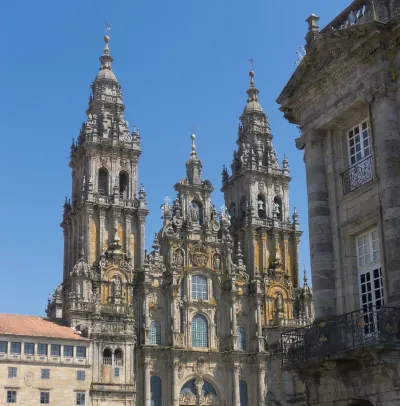
Stage 1: Santiago de Compostela to Olveiroa (By bike)
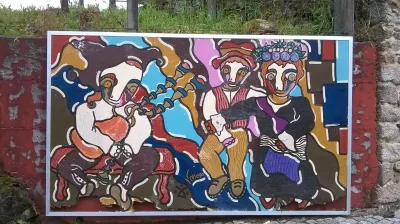
Stage 2: Olveiroa to Finisterre (By bike)
Stage 3: Olveiroa to Muxía (By bike)
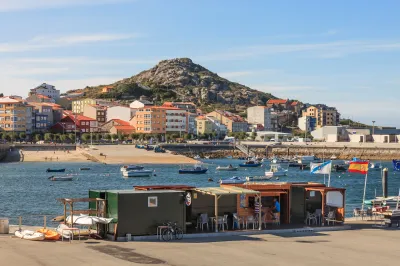
Stage 4: Muxía to Finisterre (By bike)
Elevation Profile of
Elevation Profile of Way to Finisterre and Muxía
Visualize the ups and downs of the route.
Loading elevation profile...
Error loading elevation profile or altitude data not available.
Your trip with Ourway
Everything you need for your Camino
No hassle. Your perfect route, from start to finish.
Accommodation
Selected hotels and hostels at every stage
Luggage transfer
Your backpack travels from stage to stage
Camino Guide
Detailed map with directions and services
24h Support
Team available for any unforeseen event
Pilgrim credential
Official documentation included
No commitment
Free personalized consultation
Walk this route with us
We take care of every detail
Accommodation booked stage by stage, your backpack waiting when you arrive and someone on the phone if anything goes wrong.
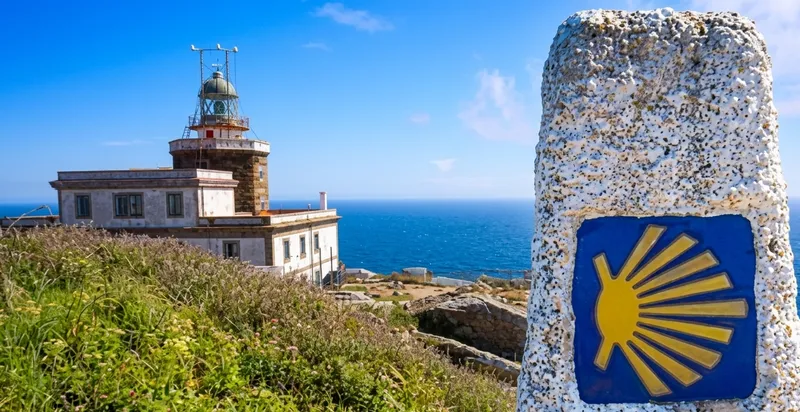
Stages
Stages of Way to Finisterre and Muxía
Santiago de Compostela → Negreira
This 21-kilometer stage marks the beginning of the epilogue of the Camino for many pilgrims. Leaving the Praza do Obradoiro, the route moves away from Santiago and enters rural Galicia. The profile is...
Negreira → Olveiroa
This is one of the longest and most solitary stages of the Way to Finisterre, covering 33 kilometers that traverse an interior Galicia, a deserted and beautiful region. The route is demanding, with a ...
Olveiroa → Cee
This 19-kilometer stage marks the exciting encounter of the pilgrim with the Atlantic Ocean. The journey begins with a gentle ride across the plateau, but soon starts a long and spectacular descent to...
Cee → Finisterre
The last stage to "The End of the Earth". This 16 km short walk is a spectacular coastal stroll that borders Corcubión Bay. The path passes through the beautiful Langosteira beach, a two-kilometer lon...
Finisterre → Lires
The first half of the crossing that links the Camino's two endings, Finisterre and Muxía, and the usual way of splitting it into two comfortable days. The route leaves the town of Finisterre and turns...
Towns
Featured Towns of Way to Finisterre and Muxía
Explore the key towns and cities of this route.
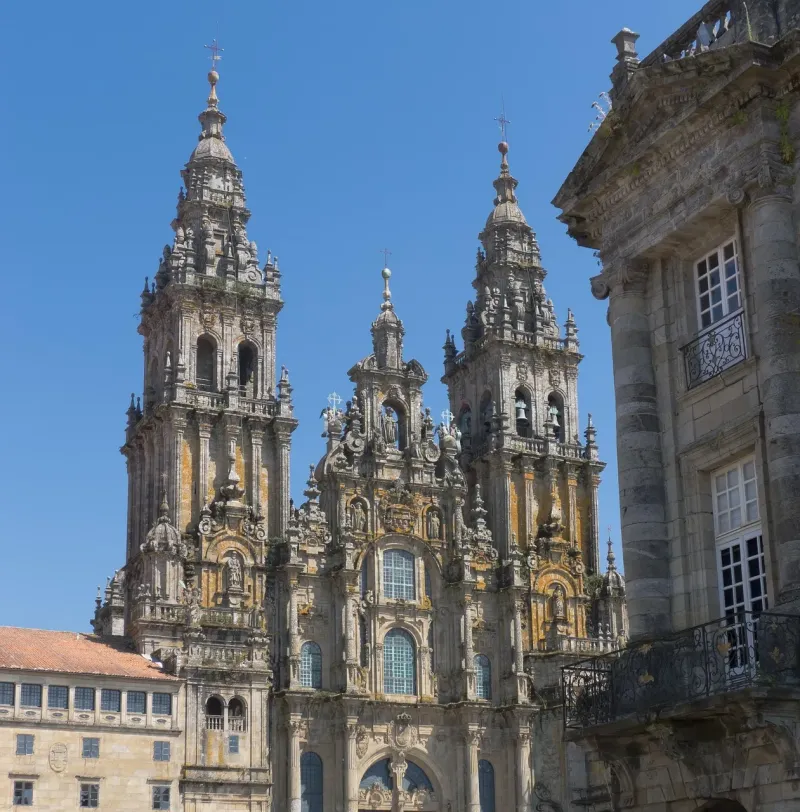
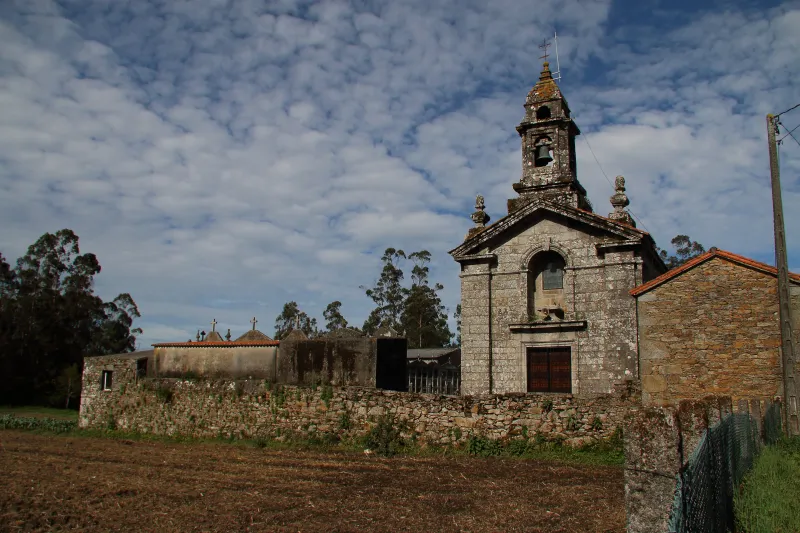

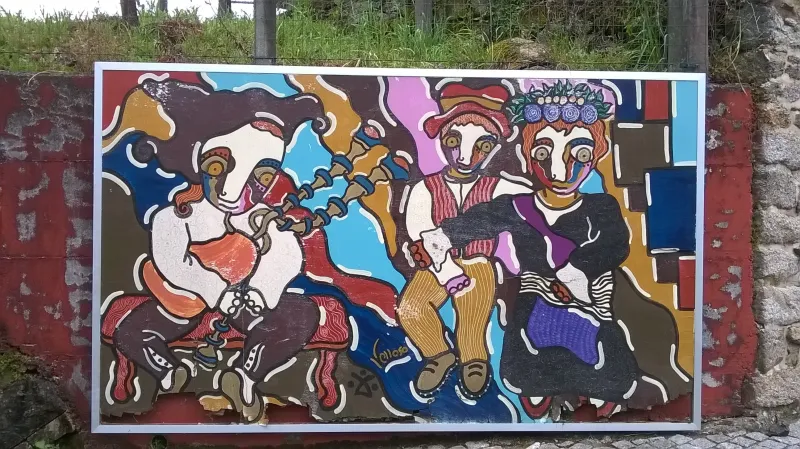
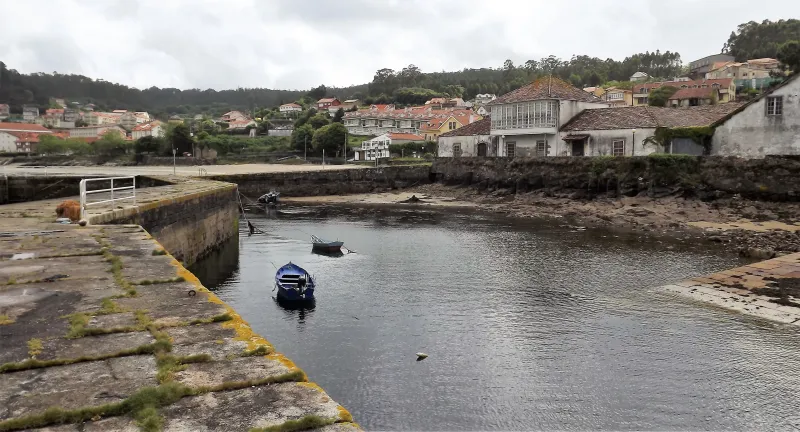
History
Millenary History of the Camino de Santiago: Origins and Evolution Way to Finisterre and Muxía
Discover the origins and evolution of Way to Finisterre and Muxía
Before the arrival of Christianity and the cult of St. James, the promontory that is now known as Fisterra (meaning "End of the Earth" in Latin) was considered by Celtic and Roman peoples to be the end of the known world. It was a magical and sacred place where every evening the sun would dramatically sink into the ocean's waters, symbolizing the transition between the world of the living and the afterlife. It is believed that there existed an "Ara Solis" (Solar Altar) in this location, where ancient tribes celebrated rituals of fertility and divination. This earthy and spiritual magnetism infused the region with a mystical aura that Christianism could not ignore.
With the rise of pilgrimages to Santiago from the 9th century onwards, many pilgrims felt that their journey was incomplete after embracing St. James in Compostela. The need to continue towards the ocean, to reach the true physical and symbolic end of their journey, became a powerful call. This additional journey was loaded with new Christian symbolism: it was an act of final purification, a stripping away of the "old man" to be reborn as a new person after the transformative experience of the Way. Seeing the sun set over the sea was reinterpreted as a metaphor for Christ's death and resurrection, and that of the pilgrim themselves. The Calixtine Codex, in the 12th century, echoes these distant lands, demonstrating that extending the pilgrimage was a known and widespread practice in the Middle Ages.
The route to "the end of the world" was enriched with the inclusion of a second destination: Muxía. If Fisterra represented the pagan and solar end of the world, Muxía brought a purely Christian and marine legend. Tradition tells that the Virgin Mary arrived at this coast on a stone boat to give encouragement to St. James during his preaching in Hispania. The rocks surrounding the current Sanctuary of Virxe da Barca (the Virgin's Boat) are considered the remains of this miraculous vessel, and are objects of healing rituals that likely also Christianized ancient pagan traditions.
The existence of these two poles of attraction, Fisterra and Muxía, consolidated a double-ended epilogue, allowing pilgrims to draw a circular itinerary from Santiago. For centuries, this extension was an spontaneous route, followed by intuition and oral tradition. It wasn't until the late 20th century that it was signposted and recognized officially, providing it with a network of hostels and services.
Today, The Way of Fisterra and Muxía is one of the most profound experiences offered by pilgrimage. Ancestral rituals continue in the actions of modern pilgrims: burning clothes or worn-out shoes, collecting shells on Langosteira beach, taking a purifying bath in the ocean, and above all, sitting in silence over the rocks to contemplate the majestic sunset. It is the true end point, a moment of introspection and communion with nature that closes the circle of a journey that begins inside and ends in the vastness of the Atlantic.
We answer your questions
Frequently Asked Questions about Way to Finisterre and Muxía
Can you obtain the Compostela by walking to Finisterre?
No, the Compostela is only granted upon arrival in Santiago. However, completing the Camino to Finisterre earns one the 'Fisterrana,' and reaching Muxía grants the 'Muxiana,' both official certificates issued in each location.
Is it done before or after arriving in Santiago?
It is common to do this route after reaching Santiago de Compostela, as an extension of the pilgrimage. Medieval pilgrims continued on to 'the end of the world' (Finisterre) where they believed the known earth ended.
How many days do I need to get from Santiago to Finisterre?
The route from Santiago to Finisterre is about 87 km, which can be covered in 3-4 stages. If you continue on to Muxía, it's an additional 30 km (1-2 more stages). You could also do the circular route between Finisterre and Muxía.
What is there to do in Finisterre?
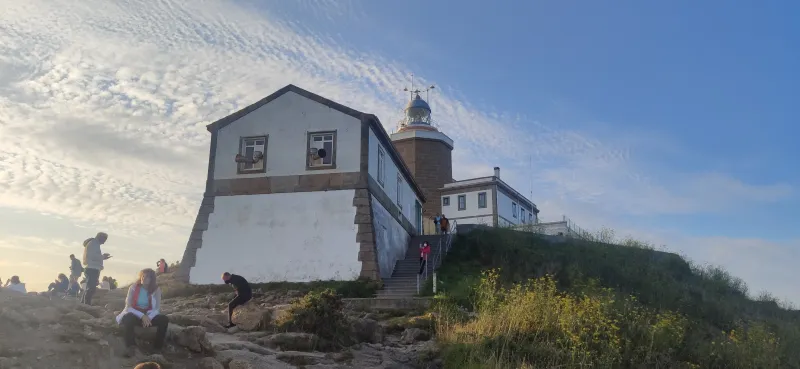
Finisterre is the end of the world for medieval pilgrims. Must-sees include Cape Fisterra with its lighthouse, Camino kilometre 0, the Church of Santa María das Areas and Langosteira beach. Many pilgrims burn their clothes or boots as a rite of passage.
Is there transport between Santiago and Finisterre?
Yes, there are regular Monbus buses between Santiago de Compostela and Finisterre (and Muxía) several times a day. The journey takes approximately 2 hours. This option is useful for returning from Finisterre or Muxía to Santiago after completing the route.
What is the difference between the Fisterrana and the Muxiana?
The Fisterrana is the official certificate issued at the Finisterre Pilgrim Office upon completing the 87 km from Santiago to Fisterra. The Muxiana is obtained at the Muxía Office upon arrival. Both are free and complement the Compostela.
Can the route to Finisterre be done by bicycle?
Yes, the route to Finisterre is suitable for cycling. The terrain is gentle with some climbs in the Costa da Morte area. By bike it can be completed in 1-2 days from Santiago. Signage is good and traffic on the paved sections is moderate.
What is there to see in Muxía?
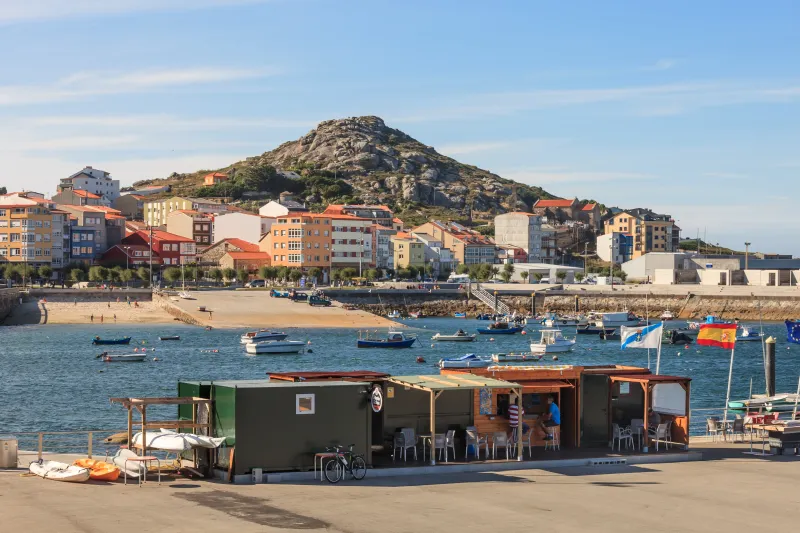
Muxía is a fishing village with a mythical sanctuary. Highlights include the Sanctuary of the Virgin of the Boat on the sea rocks, the sacred stones (pedra de Abalar and pedra dos Cadrís), the lighthouse and the Cemetery of the English. The Costa da Morte landscape is wild and spectacular.
Organize Your Camino
Ready for this adventure?
Way to Finisterre and Muxía