
Stage of the Camino
Stage Description
A gentle stage of easy relief crossing the countryside of villas between the Valdinievole and the plain of Lucca. Leaving Pescia the way climbs to Collodi, a village clinging to the hillside from which Carlo Lorenzini took the name he signed Pinocchio with, and passes the baroque garden of Villa Garzoni. The route then links Petrognano and Segromigno in Monte, in the heart of the Lucchese villa country, with Villa Mansi and its park as the landmark. The final third drops level towards the river Serchio and enters Lucca, a walled city whose tree-lined promenade along the bastions is among the finest in Italy. With no technical difficulty and no severe climbs, this is a day for walking unhurried.
The 26 kilometres between Pescia and Lucca are walked in comfort: barely 190 metres of ascent and a profile that drops gradually from the Valdinievole to the plain of the Serchio. This is the stage of the villas, of dry-stone walls and paths through olive groves.
Leaving Pescia, the way climbs the hillside towards Collodi, a village of stepped houses scaling the hill up to the castle. The maternal family of Carlo Lorenzini lived here, and he took the hamlet's name as his pen name, signing The Adventures of Pinocchio as Carlo Collodi. Below the houses spreads Villa Garzoni, with its baroque garden of terraces, staircases and water features, one of the most spectacular in Tuscany.
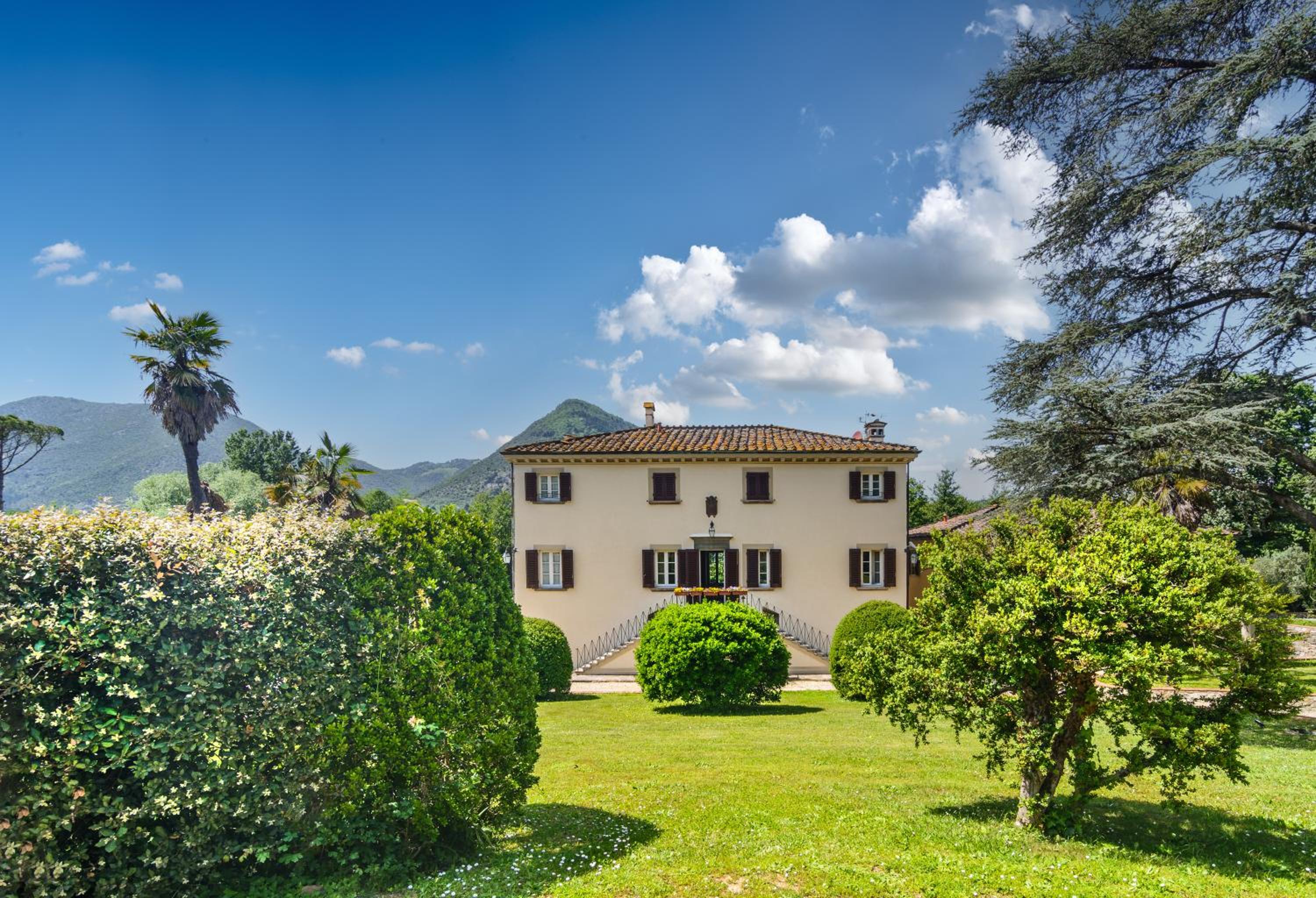
Past Collodi the way enters the countryside that separates the two provinces, between Petrognano and Segromigno in Monte. This is the heart of the Lucchese villa country, the country residences that the city's merchant aristocracy raised between the sixteenth and eighteenth centuries: Villa Mansi, with its scenographic façade and a park partly designed by Juvarra, is the most visible from the route.
The last stretch loses height to the plain and approaches the river Serchio, crossed before facing the city. Lucca is entered through one of the gates of its Renaissance wall, intact and turned into a four-kilometre tree-lined promenade along the bastions.
Inside, the cathedral of San Martino holds the Volto Santo, the wooden crucifix that tradition attributes to Nicodemus and that made Lucca an obligatory halt for pilgrims coming down the Via Francigena. With the church of San Michele in Foro, the Guinigi tower crowned with holm oaks and the elliptical square of the Anfiteatro, the city amply deserves a whole afternoon.
Leaving Pescia, the way climbs the hillside towards Collodi, a village of stepped houses scaling the hill up to the castle. The maternal family of Carlo Lorenzini lived here, and he took the hamlet's name as his pen name, signing The Adventures of Pinocchio as Carlo Collodi. Below the houses spreads Villa Garzoni, with its baroque garden of terraces, staircases and water features, one of the most spectacular in Tuscany.
Past Collodi the way enters the countryside that separates the two provinces, between Petrognano and Segromigno in Monte. This is the heart of the Lucchese villa country, the country residences that the city's merchant aristocracy raised between the sixteenth and eighteenth centuries: Villa Mansi, with its scenographic façade and a park partly designed by Juvarra, is the most visible from the route.
The last stretch loses height to the plain and approaches the river Serchio, crossed before facing the city. Lucca is entered through one of the gates of its Renaissance wall, intact and turned into a four-kilometre tree-lined promenade along the bastions.
Inside, the cathedral of San Martino holds the Volto Santo, the wooden crucifix that tradition attributes to Nicodemus and that made Lucca an obligatory halt for pilgrims coming down the Via Francigena. With the church of San Michele in Foro, the Guinigi tower crowned with holm oaks and the elliptical square of the Anfiteatro, the city amply deserves a whole afternoon.
Last updated: 28/08/2026
Where to Sleep
Accommodations in this Stage
Find the perfect place for your rest in Pescia o Lucca.
Start your adventure
Ready to walk this stage?
We design your personalised Camino de Santiago experience.
Plan your CaminoWalk this route with us
Fancy walking this route?
We don't have a ready-made package for this route yet, but we'll organise it around you. Tell us how you'd like to experience it and a specialist will reply within 24 h.
Request your proposal