
Camino de Santiago
The Camino by Bike
Dare the challenge of the Primal Path on a bike. The original route, with its demanding mountains and spectacular landscapes, in a 6-day format for experienced cyclists.
Organize your The Camino by BikeLast updated: 09/08/2025
The Route
General Description of The Camino by Bike
Related Routes
Connections of The Camino by Bike
The Primitive Way
321 km
14
High
Considered the first Jacobean itinerary, the Primitive Way was the route taken by King Alfonso II the Chaste in the 9th century to visit the Apostle's tomb. Starting from Oviedo, this demanding 321 km trail ventures into Asturias and Lugo mountains until it joins the French Way in Melide.
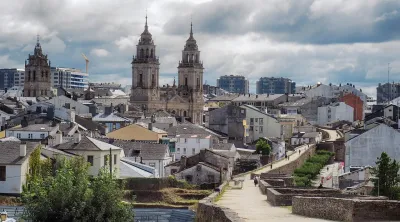
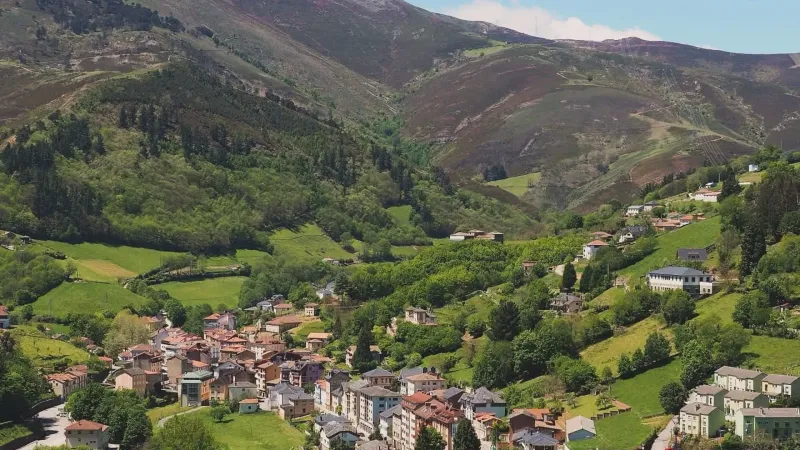
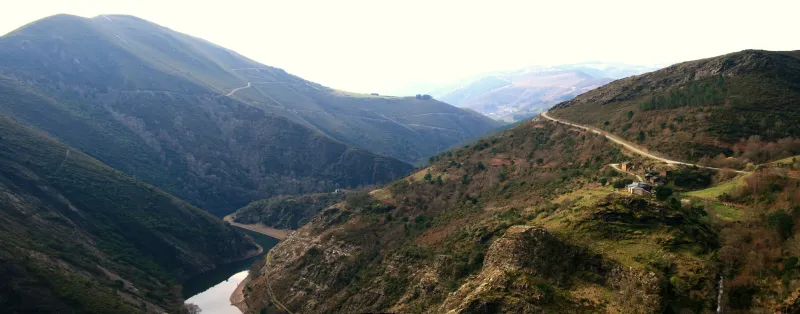
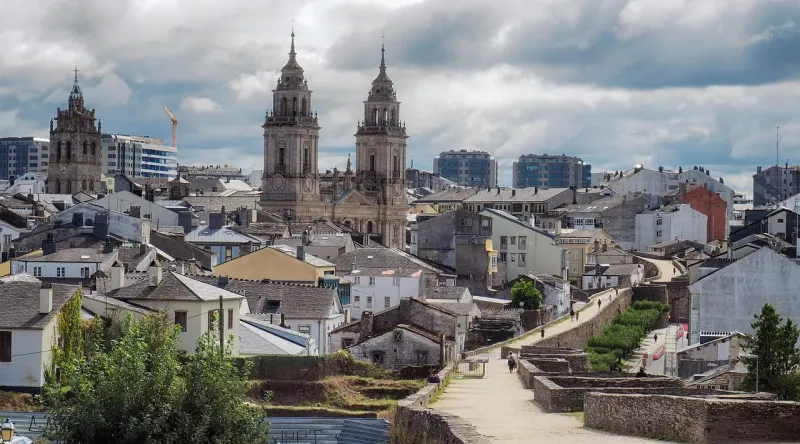
Known for its hardness due to constant inclines, but rewarding pilgrims with breathtaking landscapes, native forests, and a lower crowd, allowing for a more introspective experience. It passes through charming localities such as Tineo and Lugo, whose Roman wall is UNESCO World Heritage Site. It's the perfect option for those seeking a physical challenge and a deep connection to the origins of the Way and nature.
Stages of this variant:
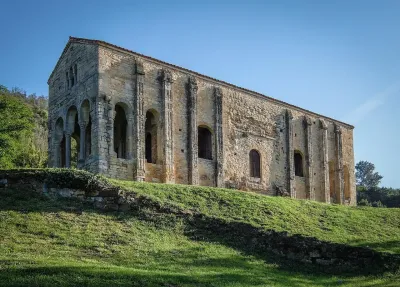
Stage 1: Oviedo to Grado
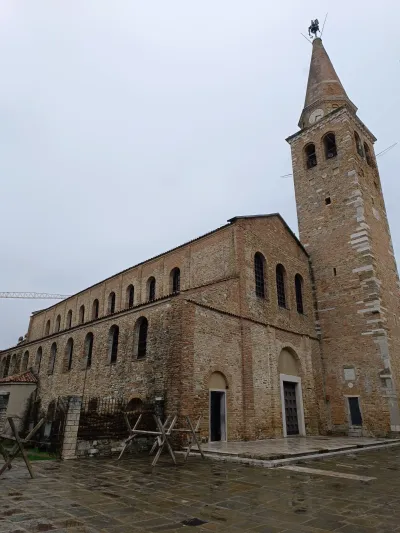
Stage 2: Grado to Salas
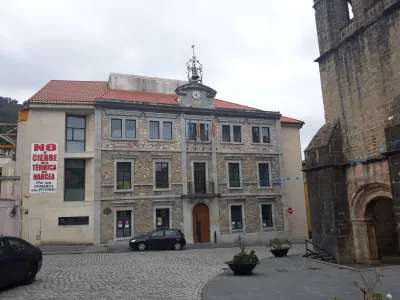
Stage 3: Salas to Tineo
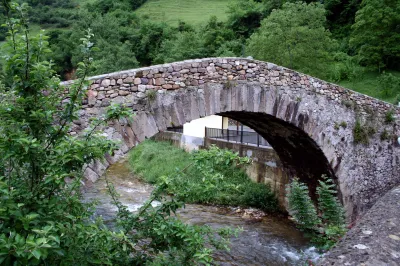
Stage 4: Tineo to Borres / La Espina
Stage 5: Borres to Berducedo
Your trip with Ourway
Everything you need for your Camino
No hassle. Your perfect route, from start to finish.
Accommodation
Selected hotels and hostels at every stage
Luggage transfer
Your backpack travels from stage to stage
Camino Guide
Detailed map with directions and services
24h Support
Team available for any unforeseen event
Pilgrim credential
Official documentation included
No commitment
Free personalized consultation
Stages
Stages of The Camino by Bike
Oviedo → Salas
First cycling stage of the Primitive Way, the oldest Jacobean route (IX century) and considered the route of King Alfonso II. Departure from Oviedo (Cathedral of San Salvador) to the west through the ...
Salas → Pola de Allande
This stage continues over the Castilian plain, on a route that combines sections of the ancient Roman road with trails between pine forests. It is a day of great beauty and solitude. The arrival at Co...
Pola de Allande → A Fonsagrada
This long stage is a true challenge that ventures into the Tierra de Pinares region. The route is flat but very demanding due to its distance. It's a journey for introspection and meditation in an end...
A Fonsagrada → Lugo
Cycling stage through the mountains of Lugo, a long day (about 70 km) that links A Fonsagrada with Lugo. The route descends from the high plateau of Lugo through the valleys of the rivers Eo and Miño ...
Lugo → Melide
This long stage enters the Tierra del Vino region. The route is a continuous rise and fall through a sea of vineyards. It's a day of great scenic beauty and physical demand. Arrival in Toro, a city wi...
Melide → Santiago de Compostela
Last cyclotourist stage of the Primitive Way, shared with the French Way in its final stretch. The 50 km link Melide with Santiago de Compostela passing through Arzúa (P.D.O. cheese) and the last rura...
Towns
Featured Towns of The Camino by Bike
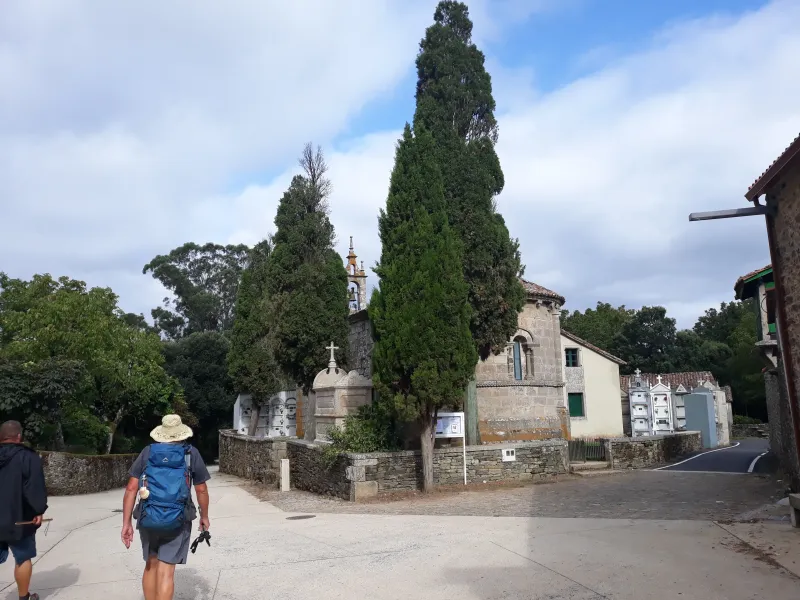
Explore the key towns and cities of this route.
History
Millenary History of the Camino de Santiago: Origins and Evolution The Camino by Bike
Discover the origins and evolution of The Camino by Bike
Its origins date back to the Roman era. Somport Pass, the "Summus Portus" (the highest port) of the Romans, was one of the main routes connecting Gaul with Hispania. This pre-existing road was the foundation on which the faith of medieval pilgrims from Italy, southern France and Central Europe, who followed the Via Tolosana (Camino de Arles), laid their journey.
The peak and configuration of the Aragonese Way as a fundamental Jacobean route took place in the 11th century, parallel to the birth and consolidation of the Kingdom of Aragon. Kings such as Sancho III the Greater of Navarre (who also controlled Aragon) and above all his son Ramiro I and his grandson Sancho Ramírez saw in the Way an opportunity to strengthen their young kingdom, attract population and open up to European cultural currents. They promoted and protected the route decisively. Sancho Ramírez founded the city of Jaca as the first capital of the kingdom and converted it into a major center of services for the road. His Cathedral, San Pedro de Jaca, initiated around 1077, is one of the gems of Romanesque art and a pioneering building whose style, with the famous "jaqués" tache, spread throughout the entire Way.
The route was equipped with an impressive network of protection and hospitality. At the top of Somport stood the Hospital of Santa Cristina, one of the most important hospices in all Christendom, cited with admiration in the Codex Calixtino. Along the Aragon River valley, which gave its name to the Way, monasteries of immense power emerged. The most important is undoubtedly the Monastery of San Juan de la Peña. Considered the spiritual heart of the kingdom, its Royal Pantheon housed the remains of the first kings of Aragon and its Romanesque cloister, excavated under a massive rock, was an artwork unique in the world.
The Aragonese Way descends from the Pyrenean peaks, passing through Canfranc, Villanúa and its caves, to reach Jaca. From there, it continues westward, entering Navarre and passing through Sangüesa. Before reaching its end, the route passes alongside another gem of Romanesque art, the enigmatic Templar church of Santa María de Eunate, with its exterior cloister. The journey of the Aragonese Way as a separate entity ends in the village of Puente la Reina. There, at a point loaded with symbolism, its waters merge with those of the Navarro Way, which comes from Roncesvalles, to form the only and great French Way. The beauty of the Romanesque bridge in the village, built to facilitate the passage of pilgrims, is the crowning glory of this confluence.
Although over time the route through Roncesvalles became more popular, the Aragonese Way never lost its importance. Today it offers the modern pilgrim a more demanding and less crowded start to the French Way, a journey to the cradle of a kingdom and the origins of Spanish Romanesque art.
We answer your questions
Frequently Asked Questions about The Camino by Bike
How long does the Primitive Route by Bike take?
The Primitive Route by bike is generally covered in 6 stages, ideal for experienced cyclists with excellent physical condition.
What is the difficulty level of the Primitive Route by bicycle?
The Primitive Route on a bicycle presents a high level of difficulty due to its mountainous terrain, with steep climbs and technical descents that require an appropriate bike for this type of terrain.
Which is the best time of year to do the Primitive Way by bicycle?
The best period for this bike adventure is from April to June and September to October, when pleasant weather combines with fewer pilgrims.
What does booking the Primitive Way by Bike with Ourway Travel include?
With Ourway Travel, your reservation includes carefully selected and secure accommodations specifically for bike travel. Additionally, we provide personalized advice to ensure you are physically and technically prepared for this challenge.
How can I book the Primitive Way by Bike with Ourway Travel?
To reserve your bike pilgrimage on the Primitive Way, simply visit our website and select the route you desire. Our expert team will be available to assist you every step of the way and ensure a hassle-free organization.
How does the Primitive Route by Bike compare to other routes like the one to Finisterre?
The Primitive Route by bike is known for its mountainous terrain and technical challenges, whereas the route to Finisterre is more varied but less demanding. The Primitive offers a more authentic and adventurous experience, while Finisterre may be more accessible for cyclists of lower skill levels.
Which is the better option between the Bicycles Primitive Way and walking routes?
For those with exceptional physical condition and technical bike skills, the Bicycles Primitive Way can be an epic choice. However, if you prefer a more relaxed journey, walking routes offer beautiful landscapes on foot with fewer physical demands.
How do I manage the pilgrim credential and luggage transportation on my Camino Primitivo bike trip?
Ourway Travel provides you with an official pilgrim credential and assistance for secure baggage transport throughout your journey. This ensures that you can fully focus on enjoying the adventure without any worries.
Organize Your Camino
Ready for this adventure?
The Camino by Bike
Walk this route with us
Fancy walking this route?
We don't have a ready-made package for this route yet, but we'll organise it around you. Tell us how you'd like to experience it and a specialist will reply within 24 h.
Request your proposal